Ukrainian Easter Traditional Baking
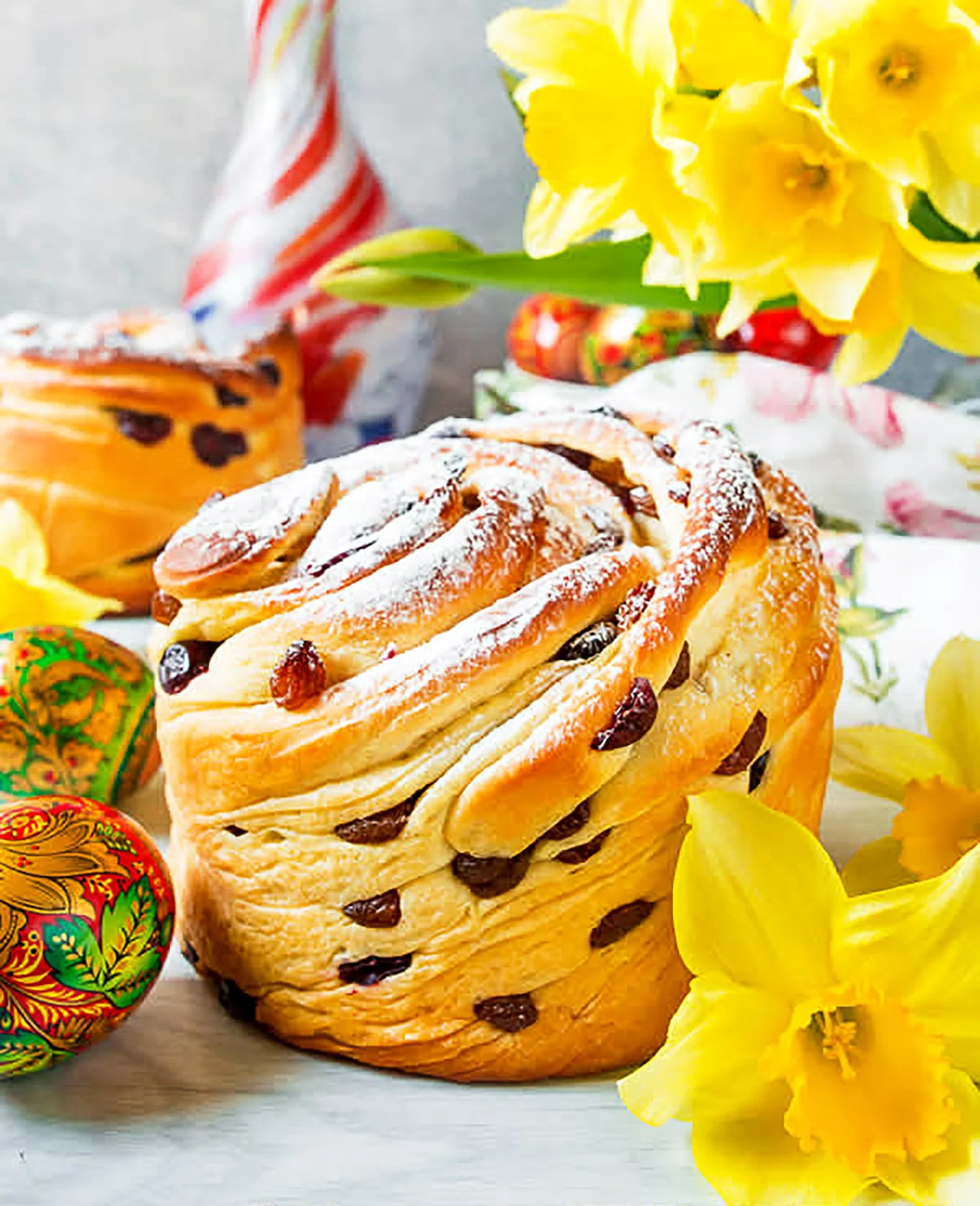
I had the idea, now that Western culture’s Easter acknowledgement has passed, that I would like to share with my readers all about the wonderful Easter baked goods stories for which my country, the Ukraine, is famous. Of course, this sharing primarily includes Easter bread, which our housewives traditionally bake just before Easter. Many new recipes and varieties of Easter bread have emerged. Cottage cheese, candied fruit, and lemon or orange zest have become popular additions to the dough. Previously, the dough was simple, consisting of eggs, butter, flour, and sugar. Instead of yeast, homemade sourdough was used, and the dough was kneaded in stages over a long period of time. All this was done by hand, and it is still believed that the warmth of one’s hands imbues the product with the best and brightest feelings, thoughts, and mood. Housewives prepared meticulously for the dough preparation and sometimes they would ask anyone creating excessive noise and fuss to leave the kitchen. Usually, it was the husbands, but children, on the contrary, were often involved in the dough preparation process and performed simple tasks. For example, they cracked eggs or sculpted dough decorations; it was educational and fun.
These days, homemakers don’t have to waste time baking. Our stores have long been actively selling a variety of sweets, including Easter bread. Recently, Easter bread, called Craffin, appeared on store shelves and it has become a favourite among many. This bread has a flaky, moist texture, made from rich yeast dough rolled into a “snail” shape with butter, raisins, dried fruit, or nuts, giving it a unique “lace” appearance. But despite the variety of baked goods available in our stores and the time-saving benefits, I still prefer homemade, classic, traditional Easter bread.
Confectionery is the pride of our country and Ukrainian artisans prepare not only our traditional dishes and pastries, but have long since expanded their offerings. Pastry chefs often undergo training in various countries across Europe and around the world, learning new recipes and techniques for preparing various sweets. Ukrainian restaurant owners frequently invite pastry chefs from various countries to conduct master classes for our artisans. Thus, many establishments have introduced new pastry products, such as doughnuts, muffins, and croissants.
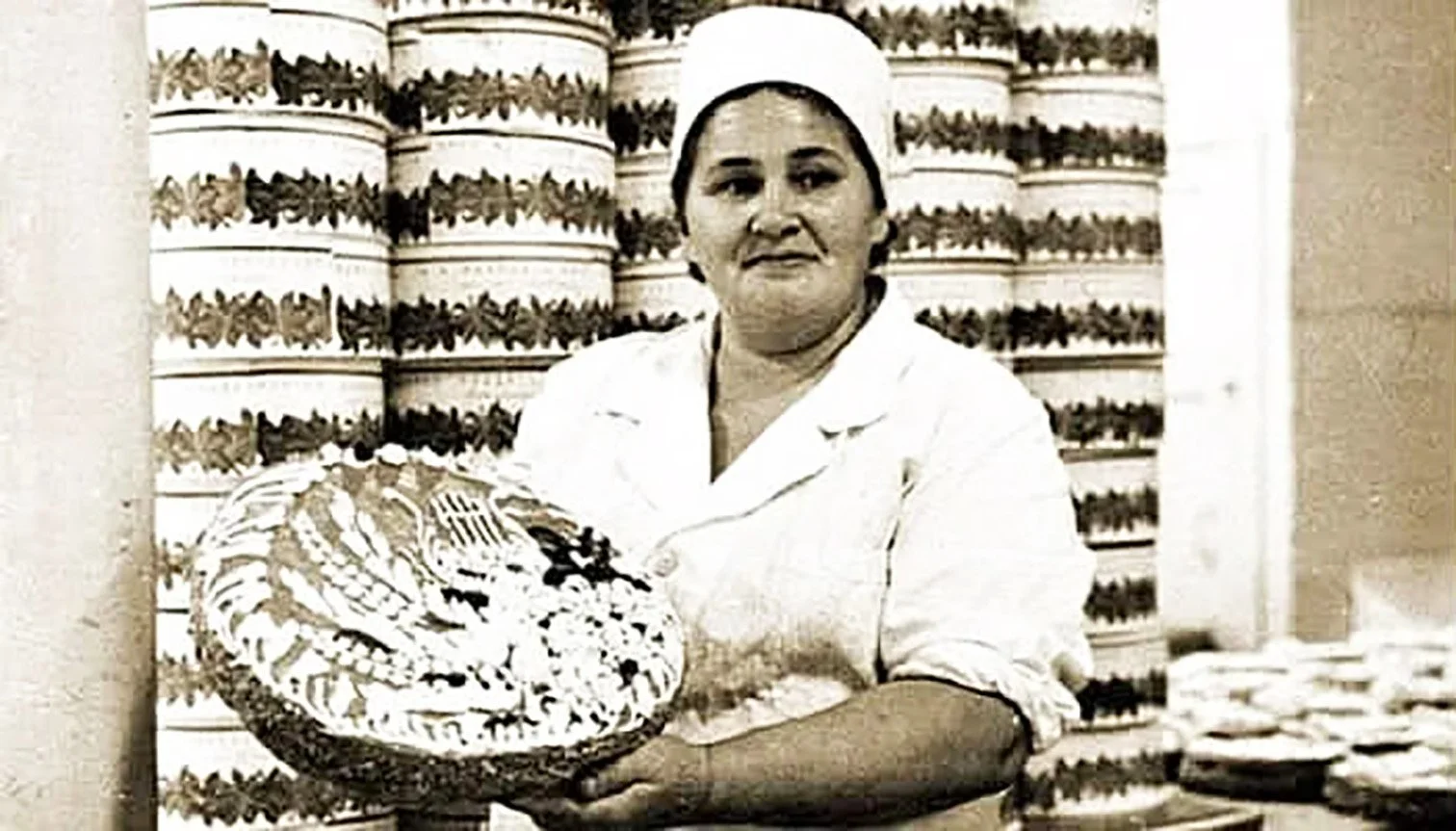
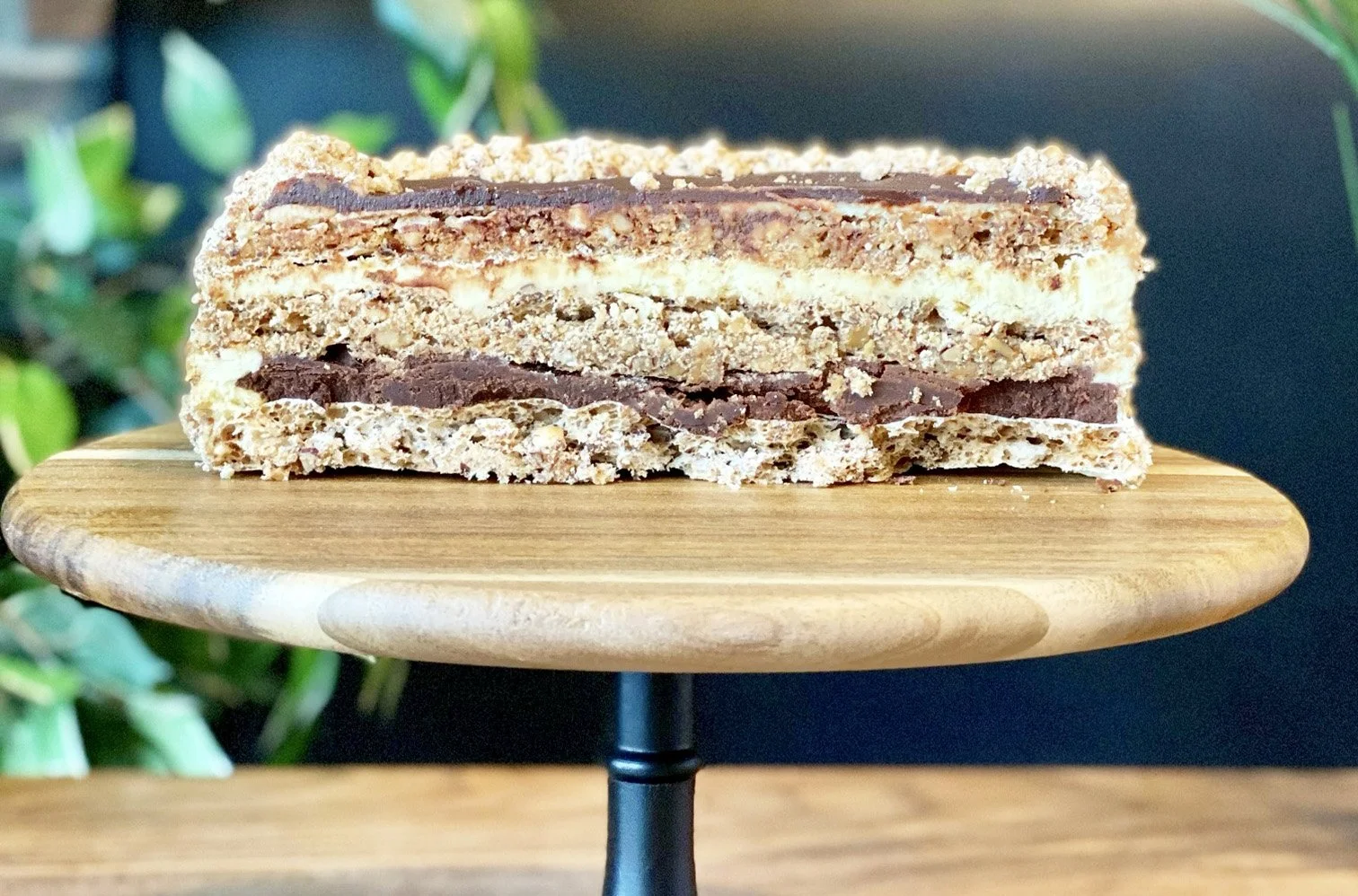
Among Ukrainian confectionery products, the most famous is the cake called “Ky-ivsky”, invented by the Karl Marx Factory in Kyiv. This cake can safely be called a work of confectionery art. It combines airy, crisp, tender nut meringue layers with egg custard, and is topped with a sweet, delicious glaze featuring lush cream flowers and candied fruit. Many legends surround the origin of the “Kyivskyi” cake. The most popular story of its origin tells how one morning, Konstantin Petrenko, the shop foreman at the Kyiv Karl Marx Confectionery Factory, discovered that someone had forgotten whipped egg whites in the refrigerator. To cover up the mistake, he and his apprentice, Nadezhda Chernogor, decided to add the frozen egg whites to the cake layers and sprinkle them with nuts. The finished layers turned out delicious, and everyone was amazed.
Later, this legend took on a philosophical meaning which emphasized that an innocent mistake might not be so terrible; sometimes it can lead to the invention of some-thing new. Therefore, one shouldn’t be afraid of making mistakes; one should work hard to achieve results. People who truly love and study their craft can create an interesting, unique product, just like the true creators of the “Kyiv” cake did.
According to the official version, the unique cake recipe was created by pastry chefs Anna Kurilo and Galina Fastovets-Kalinovskaya in 1956. The women worked diligently to develop the unusual recipe and by 1973 their improved recipe was patented. It is claimed that the exact recipe remains unknown outside the factory.
For many years, this cake was sold only in Ukraine and in very limited quantities. It was highly coveted, sometimes even exchanged for expensive services. Kyiv cake was also considered a luxurious gift for loved ones and their holiday table.
For many years, the original recipe for the cake, which includes nut-and-meat layers and Charlotte cream, remained a secret. Over time, the classic cake recipe has acquired various variations, without losing its uniqueness and complexity. The classic Kyiv cake has become a hallmark of Ukraine and a true symbol of Ukrainian confectionery. Today, the cake is produced by many confectionery factories both in Ukraine and abroad, and I am glad it has gained such widespread popularity.
You can also buy Kyiv cake in Canada; you’ll find it in Ukrainian and European grocery stores and Fresh Co or No Frills may sell it also. You can also order the cake from private pastry chefs. If you happen to see this cake, I recommend trying it and making your own judgment. It might even become one of your favourite treats.
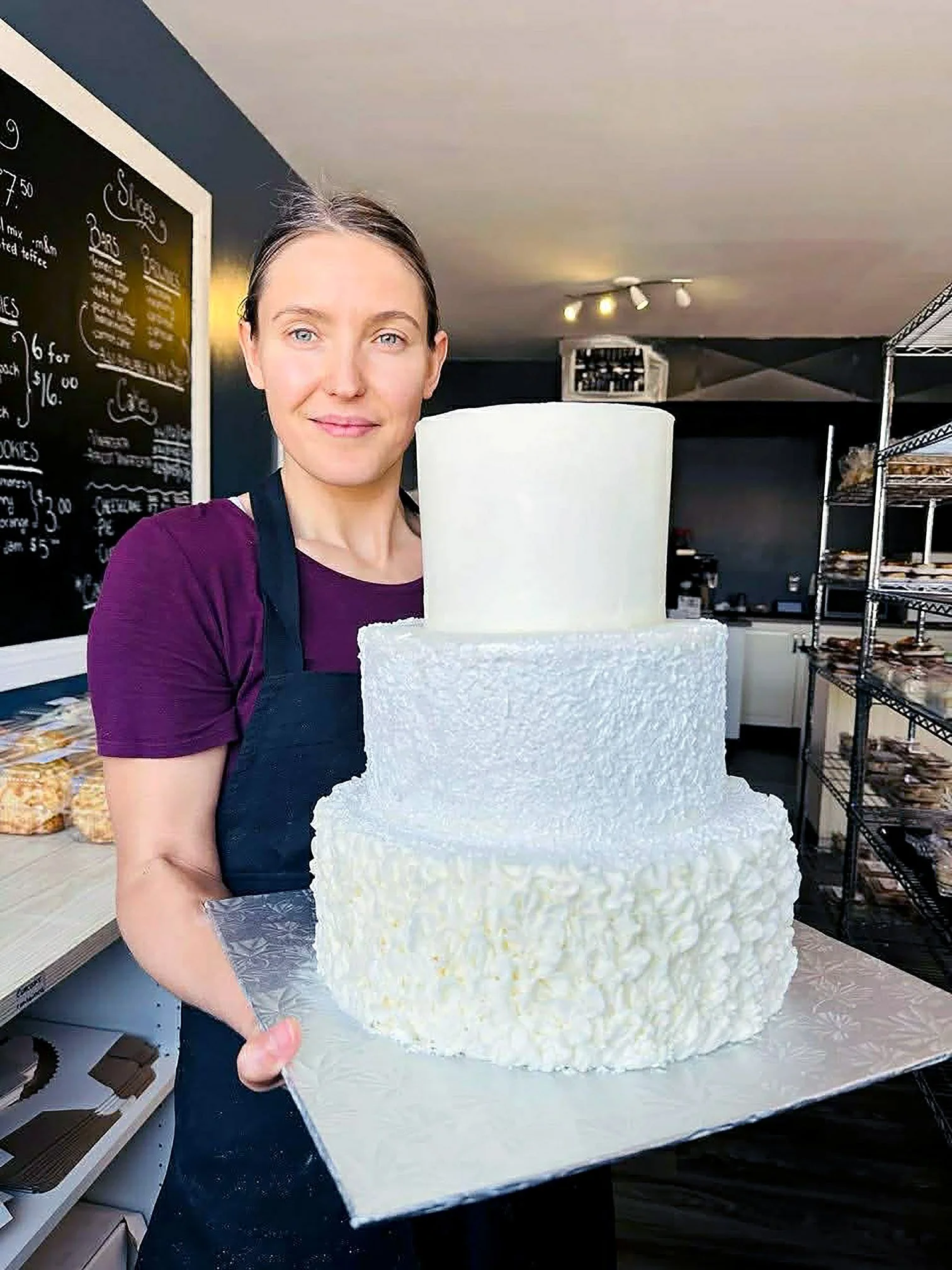
My friend from Ukraine, Oksana Batrachenko, who now lives in Winnipeg, works as a pastry chef at a local restaurant there. I met Oksana in Ukraine four years ago at a train station when I arrived at a border town on a special evacuation train. The station was noisy and crowded and amongst them, I saw a girl standing modestly, holding a fluffy cat. I approached her and asked where she was from and if she needed my help. That’s how we met, and our dialogue has continued for four years now, thanks to social media. We share experiences and impressions, and I’m very happy with our friendship.
One day, Oksana told me that she really loves baking. In Ukraine, Oksana studied culinary arts and completed various pastry training courses. When my friend showed me photos of her work, I was amazed at how many interesting things she can bake and how beautiful her cakes and pastries are. Among her many confections is the “Kyiv cake.” I’ll definitely get Oksana’s recipe and try making it at home. I think about it more and more often and believe that one day my “Kyiv cake” will appear on my table. Oksana Batrachenko didn’t stop at what she is trained at; she’s ready to continue developing and improving her skills, and I’m sure she’ll succeed in Canada.
I’m again reminded of my beloved grandmother, Maria, and her wonderful pastries and what excellent taste and imagination she had. I can recall once helping her make a dessert called “Cherries” when I was still little. Grandma made the “cherries” from sweet crushed wafers, condensed milk, and nuts. She formed small “cherry” balls from the resulting mixture, dyed them red with beetroot juice, and lightly coated them with sugar. To make the treat look realistic, she attached a real cherry stem to each “cherry.”
My mother took over the culinary tradition in our family. She baked delicious home-made cakes for her family, such as poppy seed and carrot cakes. Her signature dessert was “lake with swans.” She made the lake out of jelly, and the swans out of dough. It all looked delicious and very beautiful.
Nowadays, it’s hard for women to find the time and energy to bake sweets. They also want to take care of their health and figure, and avoid overindulging in baked goods and sugar. I tried replacing a portion of chocolate cake with dried pears, but it didn’t work. Nothing beats a cake with a delicate butter cream or chocolate frosting, savoured with hot coffee or tea. And sharing it with friends is a double treat.