Watermelons and Wars: Stories from the Ukraine
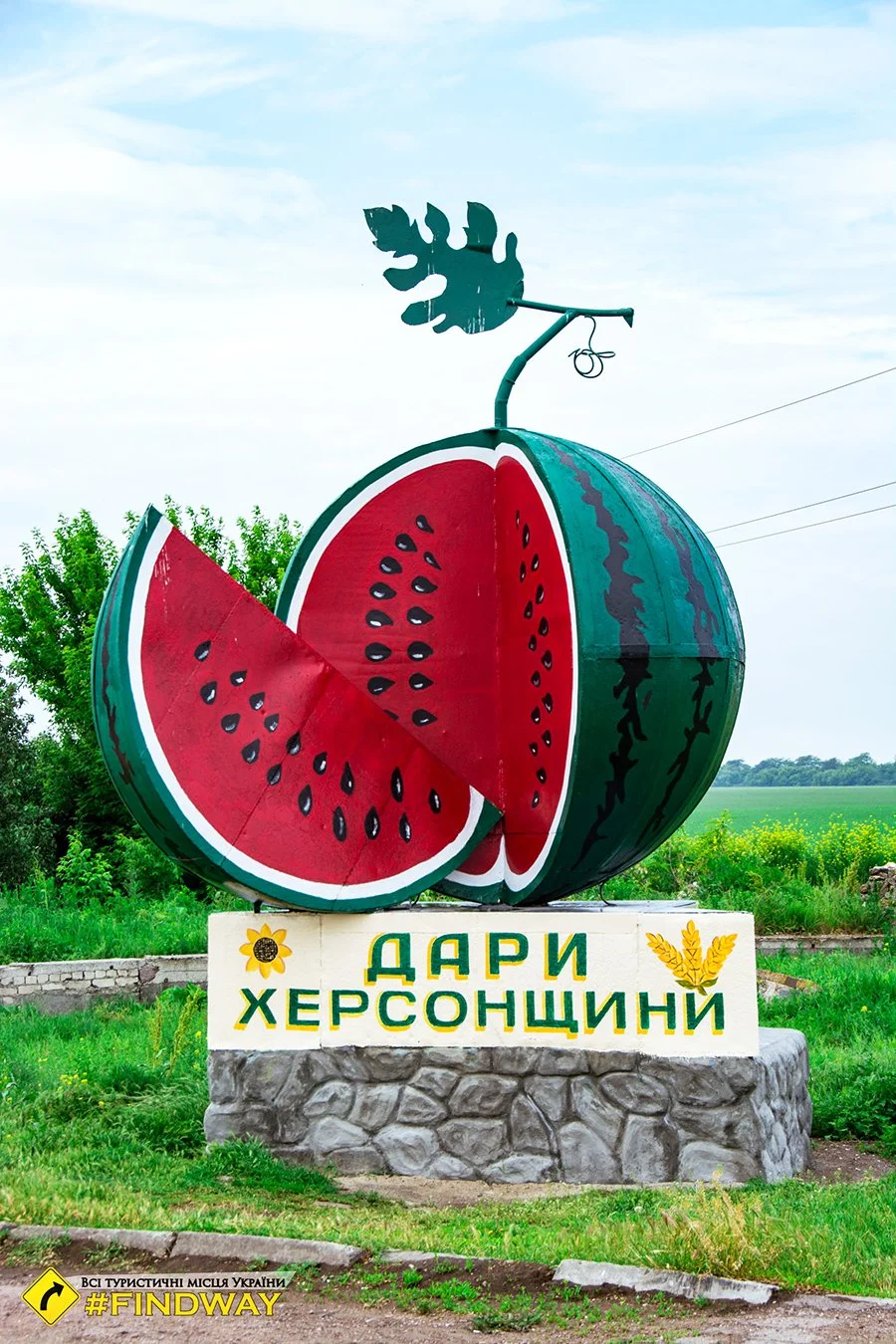
I love watermelons and dream of making watermelon jam, but that’s a story for another time. Right now I want to tell you about some of the sweetest, juiciest watermelons I’ve ever eaten that came from the southern Ukrainian city of Kherson. These watermelons were so popular that in 1988, a memorial sign, “Gifts of the Kherson Region,” was erected in the Kherson Oblast, better known as the Kherson Watermelon Monument.
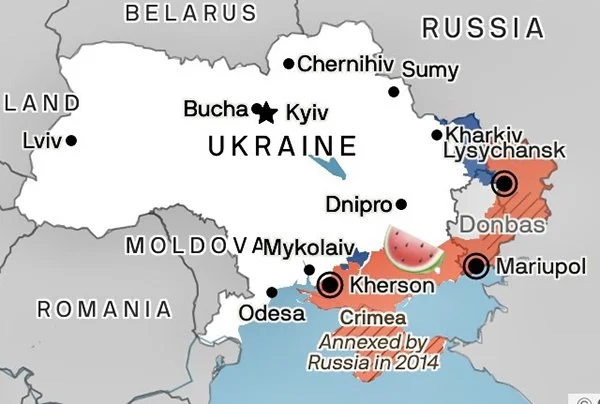
It is important that I tell you about Kherson because it is one of those cities that has been occupied during the war. This lovely sunny city is located on the right bank of the Dnieper River, near its confluence with the Dnieper Estuary of the Black Sea. It is the largest sea and river port on the Dnieper River.
Kherson is an important industrial, economic, and cultural centre. It is famous for its 18th-century architecture, watermelons, and for being the main gateway to the region’s unique natural resources—the steppes, canyons, and seashores. The city has many parks, monuments, cathedrals, and churches. Among the main attractions is the “Frigate” monument to shipbuilders. This monument was built in 1972 to honour the first ships of the Black Sea Fleet. The commemoration to the first shipbuilders stands on a high pedestal and resembles a huge three-masted sailing vessel, reaching a height of 15 meters. It is the most popular and recognizable landmark and symbol of Kherson.
The city also has numerous cathedrals, temples, and churches. The most famous are the Greek Sophia Church and St. Catherine’s Cathedral. Kherson also has the Oleksiy Shovkunenko Art Museum. According to artmuseum.ks.ua, from October 31 to November 4, 2022, the Kherson Art Museum was looted by Russian occupiers. More than 10,000 valuable exhibits were taken to occupied Crimea and delivered to the Central Museum of Taurida. There is no information whether they are currently located there or were taken to Russia. After the city’s liberation, the museum building was repeatedly shelled and damaged. These attacks sparked a strong international outcry, condemning them as a crime against Ukraine’s cultural heritage.
During the war with Russia, Kherson was occupied from March to November 2022. Its liberation by Ukrainian forces was a significant event for all citizens of the country. Currently, Kherson and the surrounding region remain a zone of active military conflict. The right-bank part, including the city of Kherson, is under Ukrainian control and is subject to daily shelling, while the left-bank part is occupied by Russian troops.
I recently learned that my English teacher, Anna, lived in Kherson before the war. I asked her to tell me about her feelings for her beloved city of Kherson. Anna’s story struck me with its depth and sincerity; it expresses so much pain, love, and compassion for her native land and people. I want to share her story with you.
Anna said, “Finding myself under occupation, my very first fear was: “What should I do now?” Lawlessness and defencelessness—there’s nothing you can be sure of anymore. One day you’re still alive, and the next, a drunken occupier might dislike your face, and you’re lying in some back alley. And no one will help you; no one will be punished for you. Then comes anger, anxiety, and a caustic sense of injustice: when people who burst into your home like criminals demand your documents on your own land. Occupation is one big, terrible paralysis. Empty stores and pharmacies, empty hospitals, all their equipment taken to Russia. My family had to experience this horror first-hand—my grandfather died of a stroke. There was nothing and nowhere to treat him. My mother was left an orphan in a foreign country. More than two years have passed, and she still hasn’t visited his grave, because there’s a chance she’ll be next. A chance that, in your own land, you’ll be imprisoned simply for who you are. I haven’t been to Ukraine since the end of May 2022. Reading the news, looking at photos of destroyed houses and articles about “this is a red zone, we don’t go here anymore,” my brain produces an error. Like, what is this, a red zone? We used to go there for ice cream. And now what? Hunger. The region that once fed the entire country is mired in famine. It sounds like nonsense, like a nightmare, but you can’t wake up from it. The war began when I was nineteen. My best years flew by in foreign countries, surrounded by strangers. My younger sister was seven. She didn’t even have time to finish her first grade at school. My parents lost everything they had tried to build over this life and pass on to their children. Stolen youth, stolen childhood, and stolen old age.
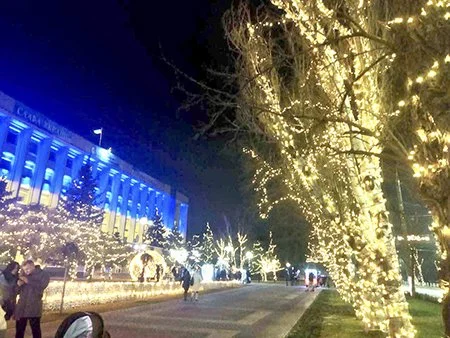
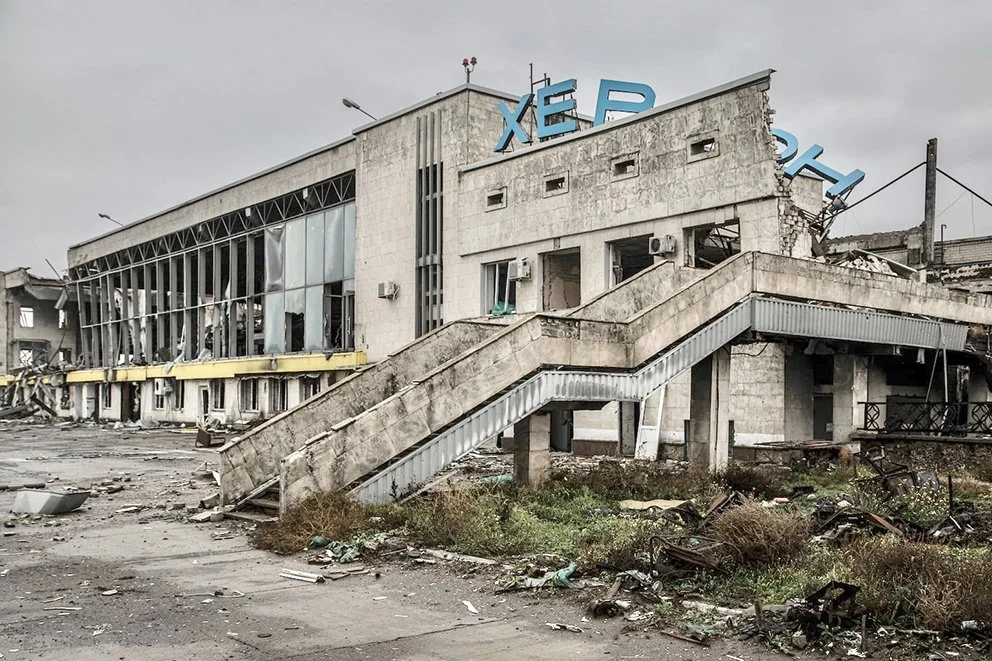
The Kherson region remains in everyone’s memories differently. Some will tell you about endless fields of wheat and grapeseed, others about the sea. Some will chatter about the Dnieper and Hydropark, where he spent his summers with friends and family. Some will remember their native village. Some will tell you everything, but for others, it will be such an unhealed wound that they will decide to remain silent. Now I’m 24. I have visited about ten countries and endless throng of guests in the hope that one day I will be called back home. Few photos remain. Most had to be deleted—the occupiers at their posts checked phones daily. But I will show you our last New Year, which felt special. I will show you how beautifully the trees bloom in my homeland. And the airport, which never had a chance to reopen after extensive renovations. We dreamed of flying to other countries. Now all that’s left to dream of is returning home from other countries:”
When I asked Anna about her favourite city, I sensed a profound sense of pain hidden behind her calm exterior. I hope that all will be well for Anna and her family, and that even in such difficult times, they will be happy.
In 2014 Russia annexed Crimea, which Ukraine, Canada and most countries in the world consider illegal. This was a shocking event for Ukrainians. Crimea is an integral administrative-territorial unit within Ukraine, with the status of the Autonomous Republic of Crimea. The seizure of the peninsula was considered illegal by most UN member states and the international community, violating Ukraine’s sovereignty and territorial integrity. When Crimea was part of Ukraine, people came there from other regions, built their homes, and opened businesses. Every summer, our families travelled to Crimean resorts to relax and improve our children’s health. The Black Sea, warm climate, and stunning nature attracted people from both Ukraine and Russia. There was no hostility between the people. We were proud of Crimea, calling it our pearl. Musicians, actors, and athletes born and living in Crimea represented our glorious country, Ukraine, on the world stage. They performed under Ukrainian flags and, hand over heart, sang our anthem.
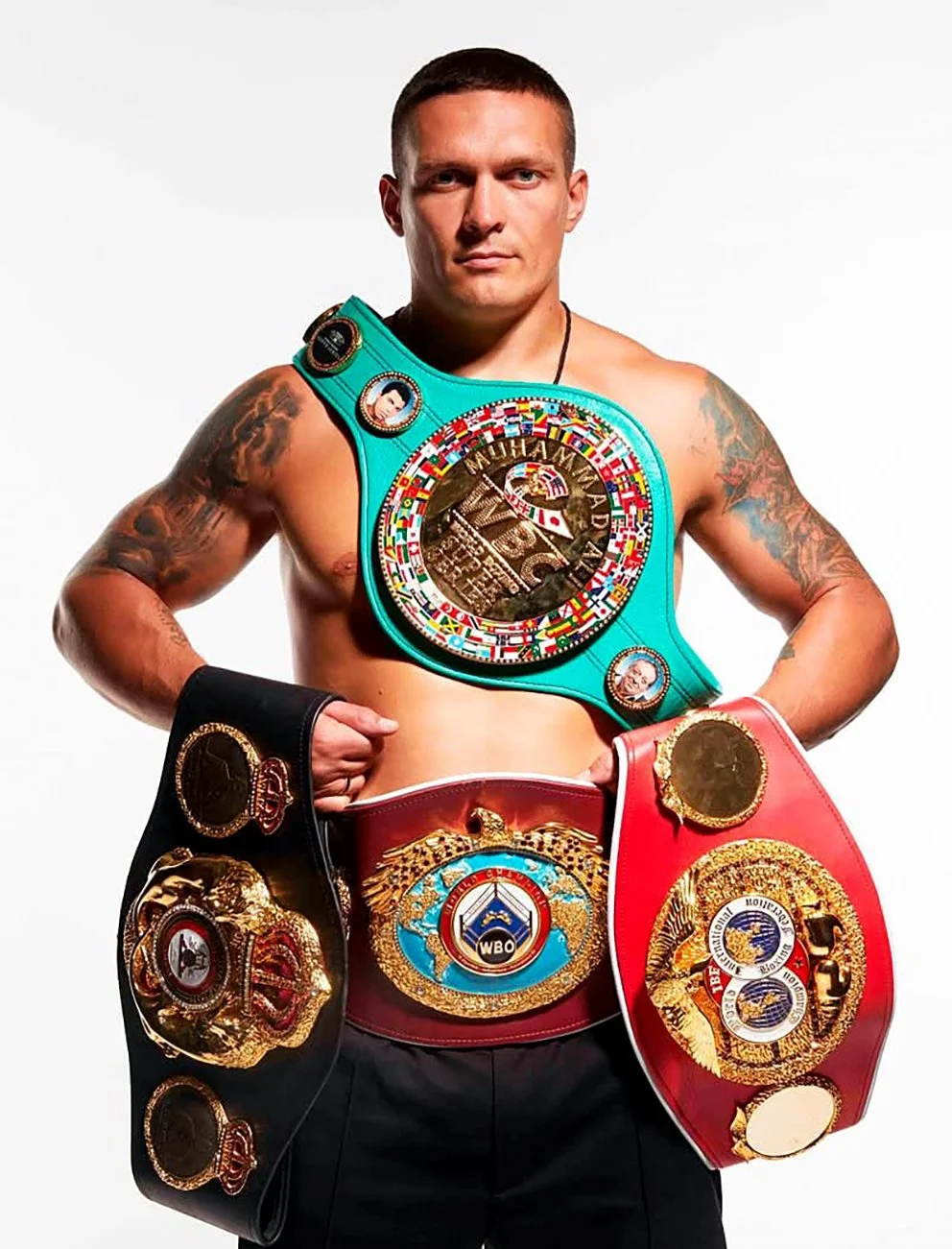
One such person was the renowned professional boxer Oleksandr Usyk, born in the Crimean city of Smeropol. Oleksandr Usyk is an outstanding Ukrainian professional boxer who, over the years, held all major titles (absolute champion). Among his key achievements are the title of absolute world champion in the cruiserweight and super heavyweight divisions, a gold medal at the 2012 Olympic Games, and numerous state orders and awards. Oleksandr continues to support Ukraine. Until 2014, Oleksandr and his wife Katerina lived in Crimea, but due to the annexation of the autonomous republic by Russia, the family moved to Kyiv. They lived in the capital for a long time. Before the full-scale war, his family bought a house near Kyiv.
For a period of time, Oleksandr Usyk’s family home was under Russian occupation. Fortunately, his wife, Katerina, and their children managed to escape. When Oleksandr and his family returned home, they shared the aftermath of the occupation online. Oleksandr’s account: “They broke the trees, the fir trees I planted with the children. But compared to what others lost, it’s nothing. Thank God, the house is still standing; it’s been restored. The people who are helping me with it did the repairs, removed all the dirt they left there, cleaned it up, and put up a fence.”
These are just a few stories among thousands. I would like people to know what people are feeling and enduring during these difficult times for Ukraine. And at the same time, I’m proud that there are so many people living here in Crowsnest Pass who sympathize with Ukrainians and wish peace and prosperity for our families