

Ukraine’s Spectacular Churches
There are many churches of various denominations in Ukraine. The architectural grandeur of the buildings and their antiquity always evoke admiration and a desire to pray for the health of loved ones, friends, and for peace in our land.
Canada and Ukraine are similar in that each region of our countries has its own unique characteristics, architecture, nature, and climate. I would like to share with you all about some of the unique churches located in my country.
Churches are typically built on elevated structures, thus demonstrating their superiority over other buildings. There have even been cases where people have filed complaints with various authorities when a new building erected next to a church is deemed too tall, unsightly, and infringing on its boundaries. However, from a legal standpoint, the height difference itself (a building taller than a church) is not a violation, as long as urban planning regulations and building requirements are not violated. Churches are treated with respect as historical cultural treasures of our country.
Each Orthodox church may have its own name. Churches were often named after the patron saint of their founder (prince), such as the Church of St. Prince Vladimir. Churches could also be named after saints. (Dedications are made to saints whose lives and works were connected to the Ukrainian land.)
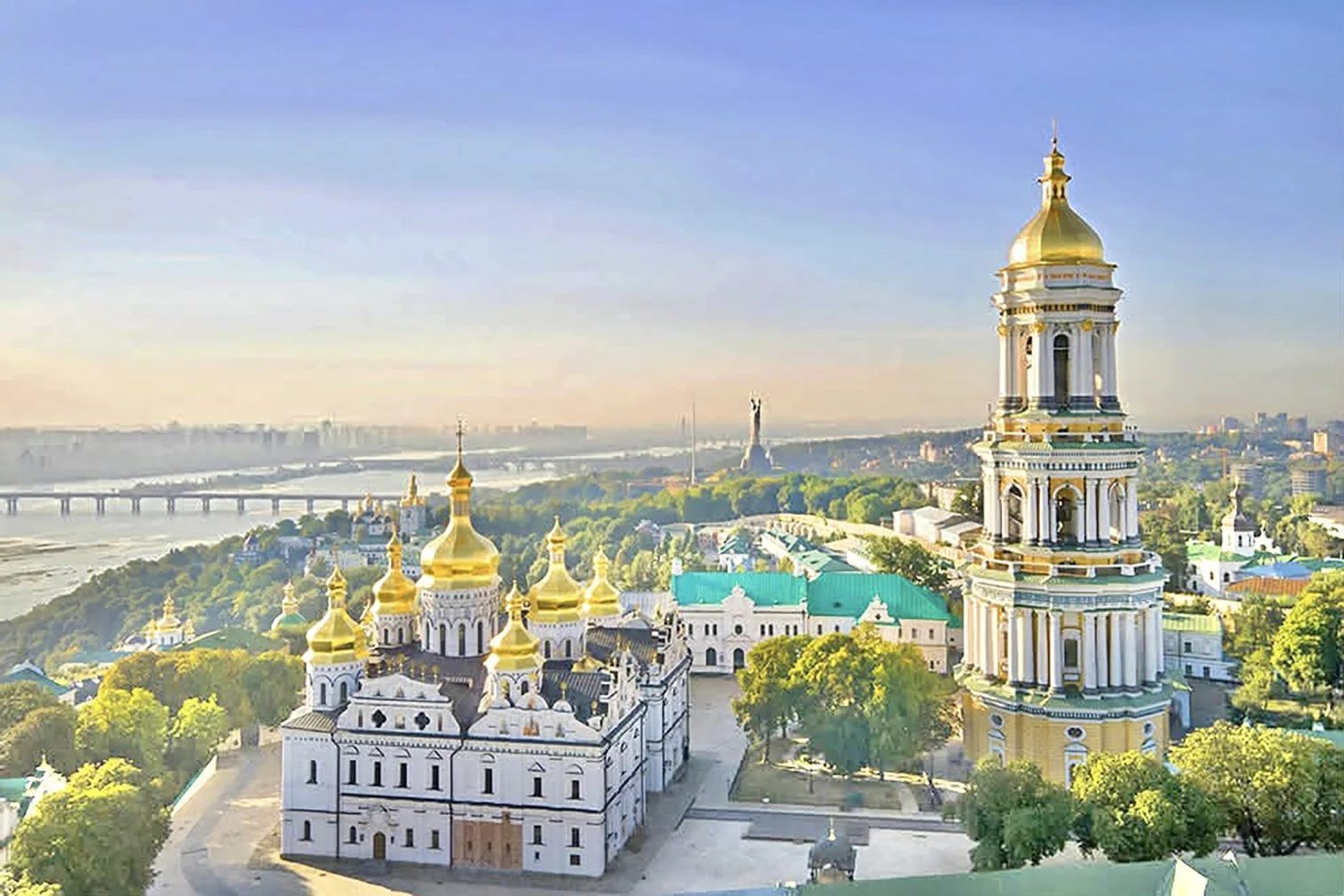
Kyiv, the capital of Ukraine, has many churches, each unique in its history and architecture. One of the city’s most famous landmarks is the Kiev Pechersk Lavra. This place is renowned for its churches and beautiful sites. Kiev Pechersk Lavra is one of the first and most important Orthodox monasteries in Rus’, founded in 1051. It is a vast historical and cultural complexes on the hills of Kyiv, famous for its Near and Far Caves, where the remains of more than 120 saints and monks rest. The Lavra is a UNESCO World Heritage Site and combines a cenobitic monastery (a communal form of monasticism) with underground hermit cells. Lavra is an honorary title given to the largest and most historically significant Orthodox male cenobitic monasteries. The word derives from the Greek for “street, lane,” and originally signified a crowded monastery. It is a place of elevated spiritual life, often directly subordinate to the patriarch.
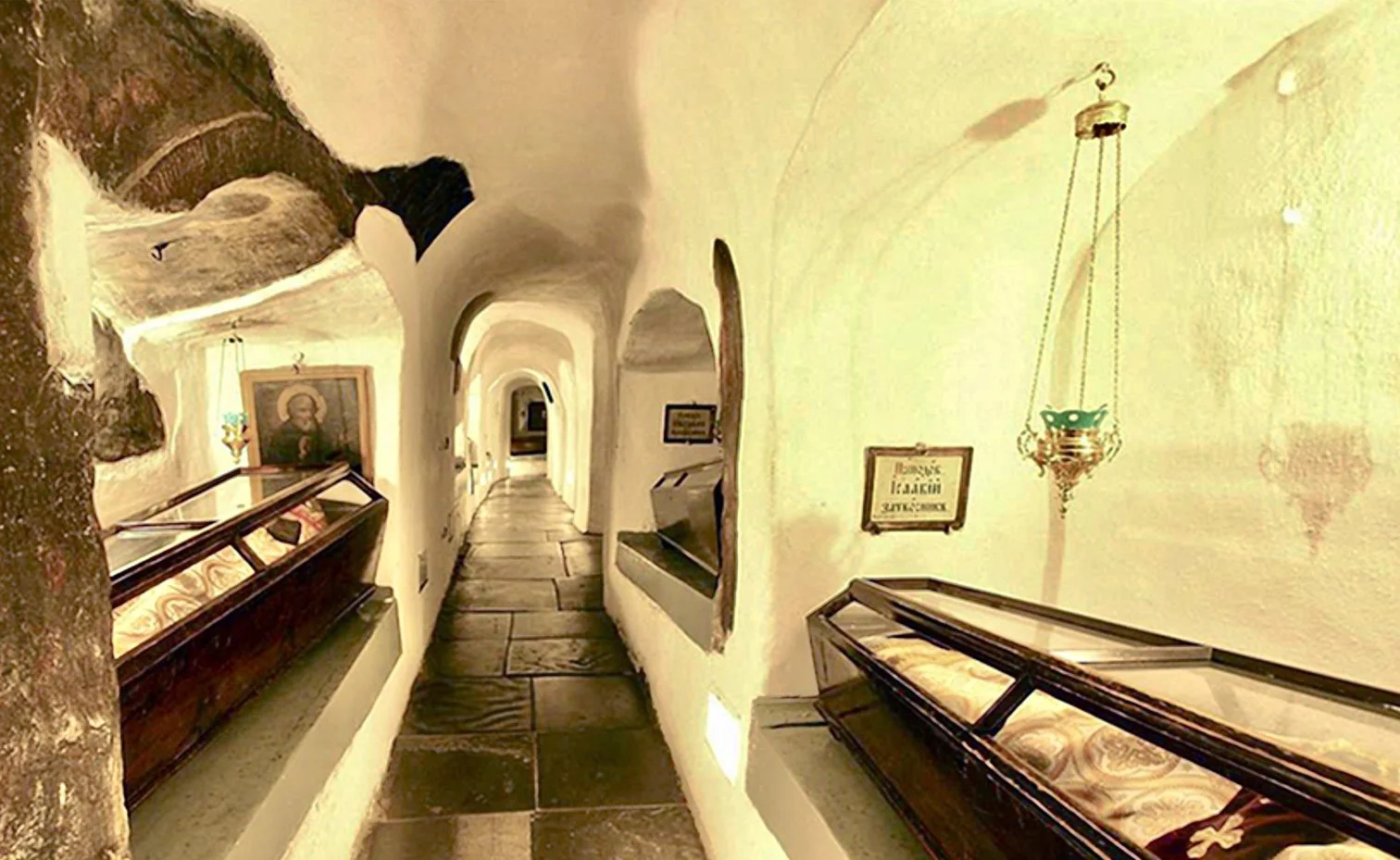
The Kiev Pechersk Lavra attracts many people, including pilgrims, believers, and ordinary tourists. The complex includes museums, exhibitions, and recreation areas. But the main feature of these holy sites are the Near (383 m) and Far (293 m) caves, with underground churches and labyrinthine corridors about 2 meters high, connected to underground churches (for example, the Church of the Nativity of Christ in the Far Caves). The caves contain the remains (bodies or body parts) of people canonized by the church.
I have personally visited the caves several times. I first visited there with my parents when I was about ten years old, and I admit, I was a little scared at first. Imagine descending into a dimly lit, narrow stone corridor with a candle in hand. Glass structures enshrining saints are located on either side of you, and niches with skulls and bones can also be seen in the cave walls. From an archaeological perspective, these exhibits are very interesting, but for an unprepared visitor, it’s best to carefully study the information and instructions; then the tour will proceed smoothly and leave the best impressions.
As we navigate these underground labyrinths, we have the opportunity to pray to the saints and see their places of residence, including the cells where they lived. You can also meet monks who will tell us about the lives of each saint and guide us through the underground labyrinths.
The Kiev Pechersk Lavra, a national preserve, houses a number of museums. The main museums include the Museum of Book and Printing of Ukraine, the Museum of Theater, Music, and Cinema of Ukraine, and the Museum of Decorative Arts. Also on the premises is the Nikolay Syadristy Museum of Microminiatures. A distinctive feature of his work is that he crafts all his works by hand, using a technique he personally invented for each type of work. The microminiatures presented in the museum’s collection expand established notions of the limits of human capabilities. All the museum exhibits are unique and unrepeatable. Syadristy created the world’s smallest working electric motor; this device is almost 20 times smaller than a poppy seed. Among the exhibits, a shod flea can be seen under a microscope. Tourists are always delighted by the sights.
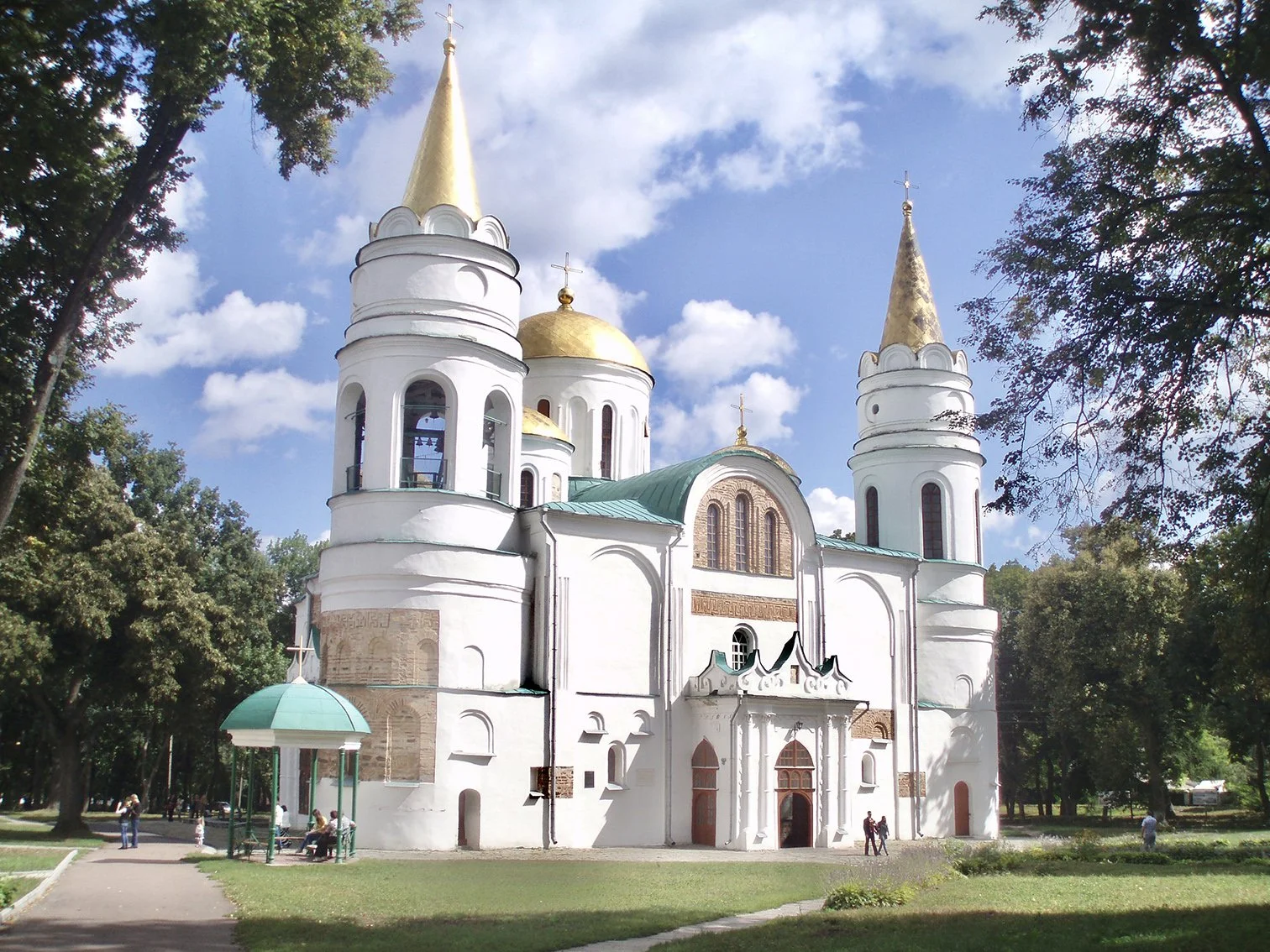
Of all Ukrainian cities, Chernihiv has one of the richest churches. Chernihiv has one of the largest concentrations of beautiful churches in Ukraine with over 26 of them. One of the oldest surviving architectural monuments is the Cathedral of the Transfiguration. It played a significant role in shaping the building codes of ecclesiastical art in Rus’ and Ukraine. Remnants of frescoes, carved choir stalls, floors, and columns testify to its formerly rich interior.
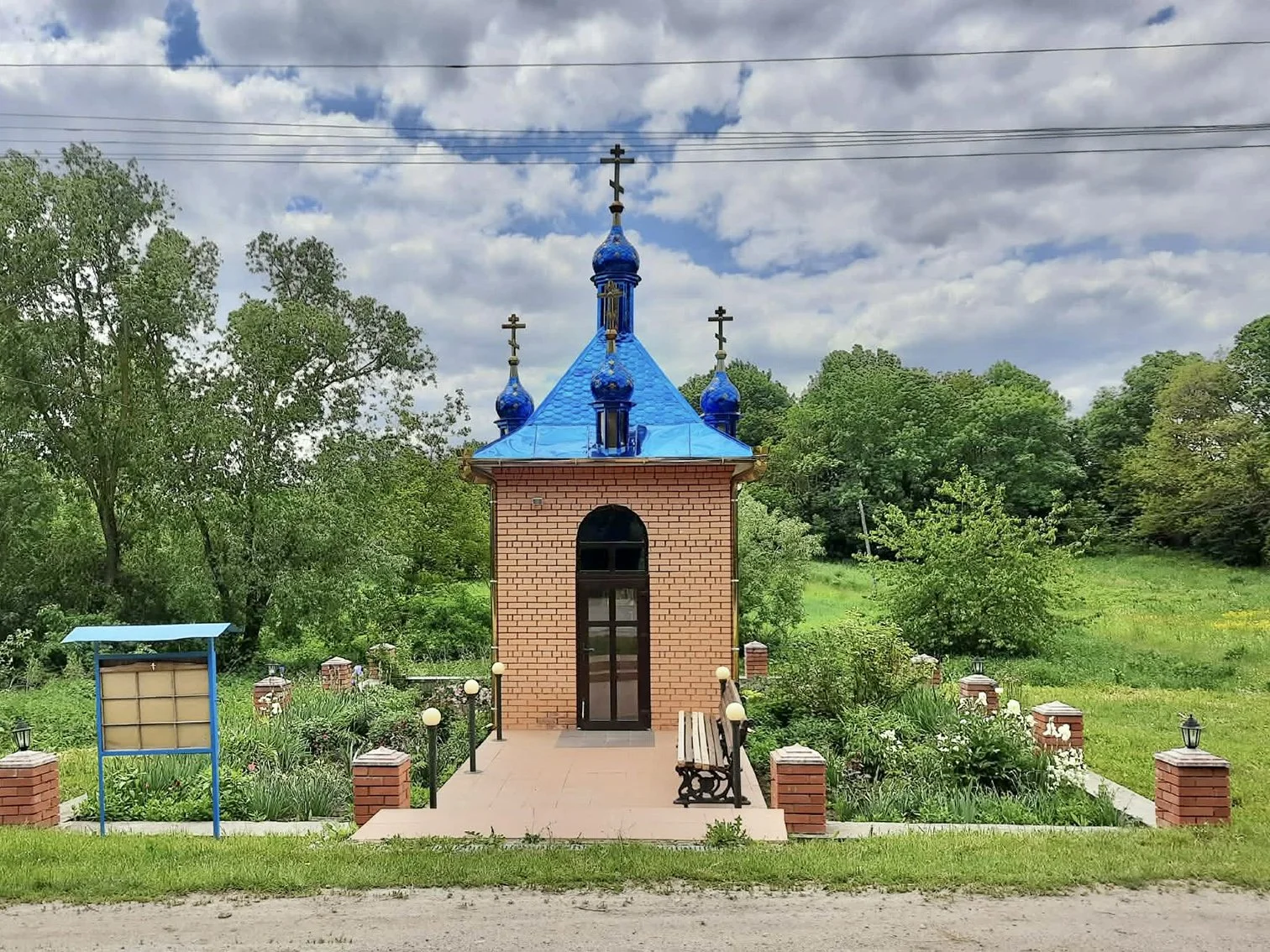
In western Ukraine, small prayer buildings called chapels are common. They lack an altar and are designed for one or a few people. Chapels resemble miniature churches or may have a unique architectural style. These miniature churches are typically found at crossroads, along roads, in cemeteries, and on private estates. Anyone can enter and pray, asking God for a safe journey or success in business. Such prayer relieves tension and anxiety and helps one feel optimistic about the day ahead.
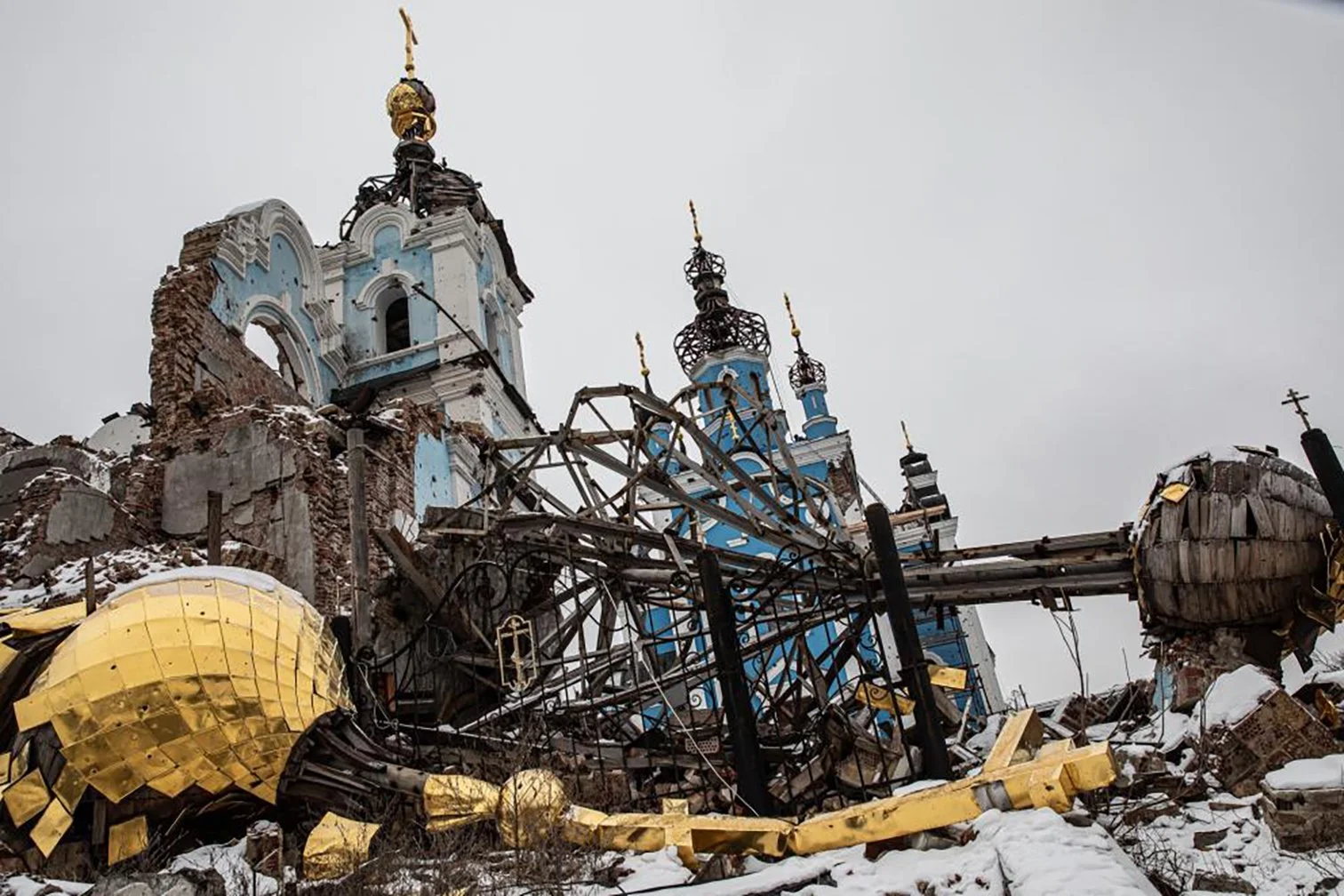
During the war, according to the Institute for Religious Freedom, as of early 2023, approximately 500 churches, mosques, and synagogues were destroyed or damaged in Ukraine. Most of the damaged buildings were Christian churches, especially in the Donetsk, Luhansk, Kyiv, and Kharkiv regions, including both modern buildings and unique architectural monuments (information taken from the World Council of Churches).
The people of Ukraine try to live ordinary, peaceful lives and know that war is terrifying. At the same time, many see Ukrainian people living ordinary lives and are even wondering if the war is over. But that’s the horror of this war: the element of surprise puts people under immense psychological pressure. Not knowing whether they’ll wake up in the morning or whose house will be next. Most Ukrainians aren’t nomads and are very attached to their homes. Migration was mostly internal, with people moving from villages to big cities. Now, after the war, many like myself have dispersed to different countries and are very concerned about the consequences of this war and about global security in general.Fiv
In our age of globalization, society is changing, value systems are being redefined, and humanity is seeking new forms of coexistence. I sincerely hope that, despite all the challenges of our time, we will be able to end wars and conflicts, and that each of us will take small steps toward this end.