

Looking Back: Some Accordian Reflections
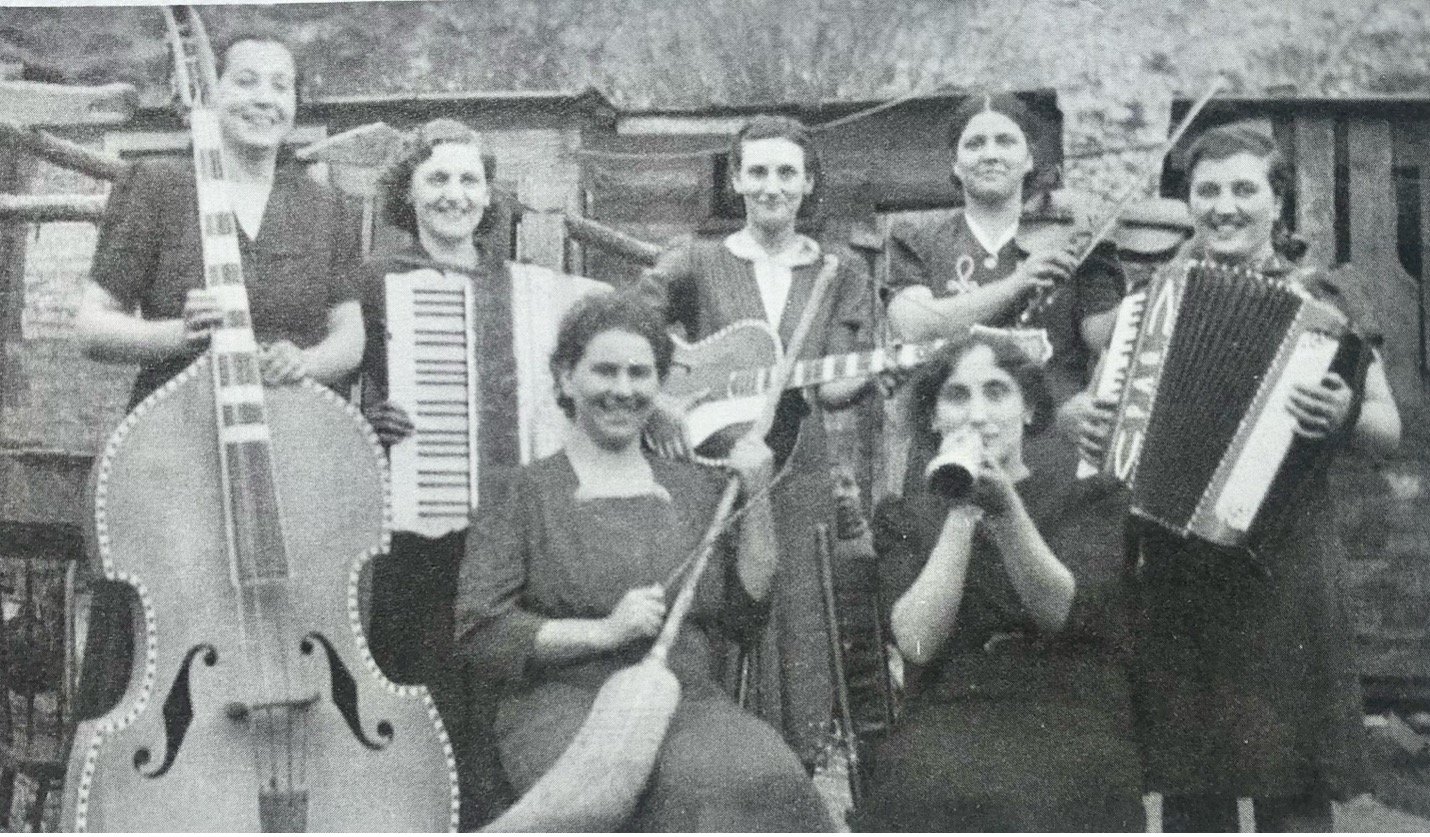
Recently I posted an image on social media from a marvelous history book entitled “Michel Memories” that resonated really well within facebook land. That is to say; it drew out memories which people readily shared. I have discovered that this is a wonderful way to connect us all , on just about any subject. A facebook post done on the old Crowsnest Lake dance hall (now gone) some time back drew almost a hundred responses and some lovely personal memories that I got to share in a column.
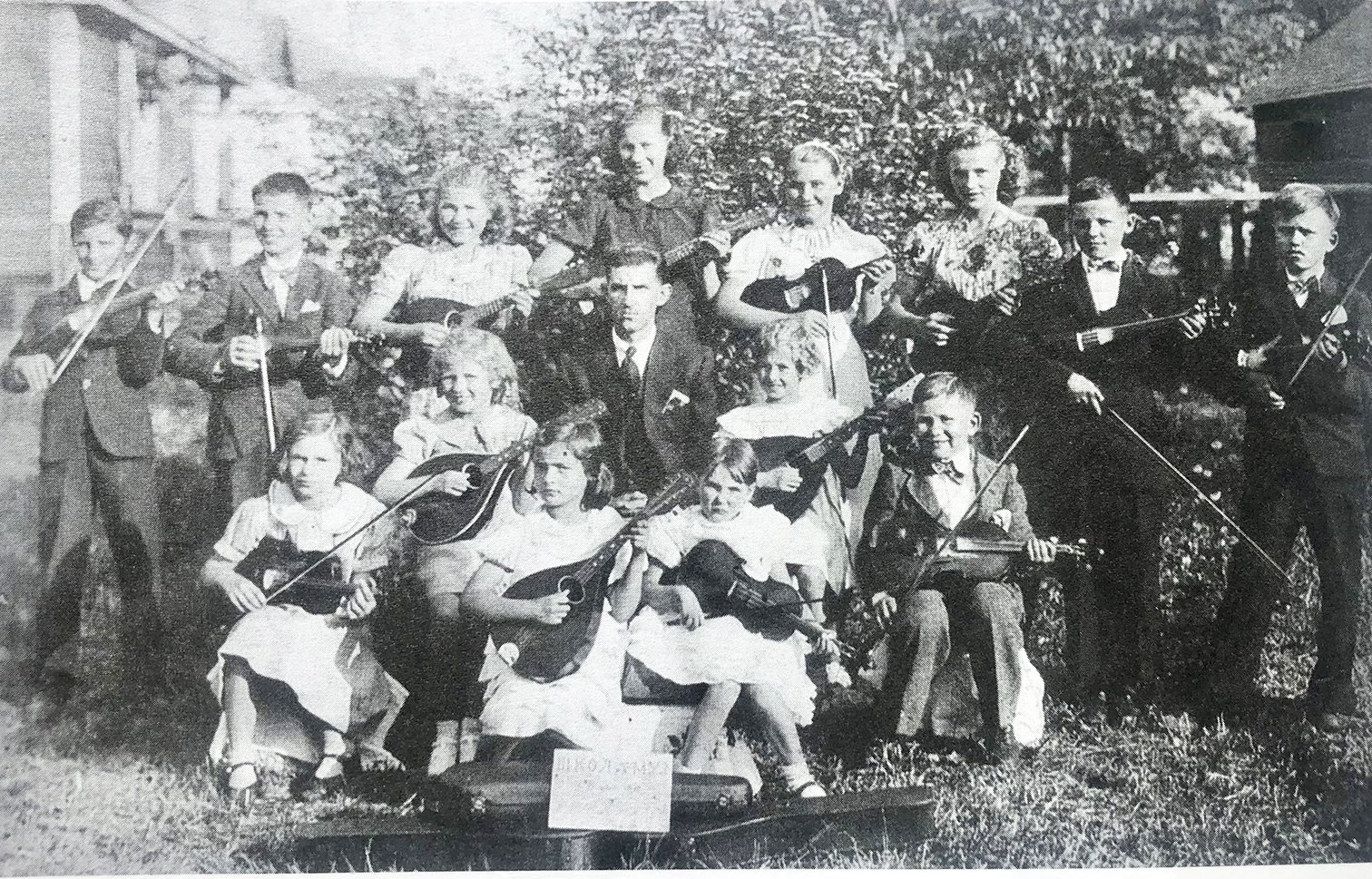
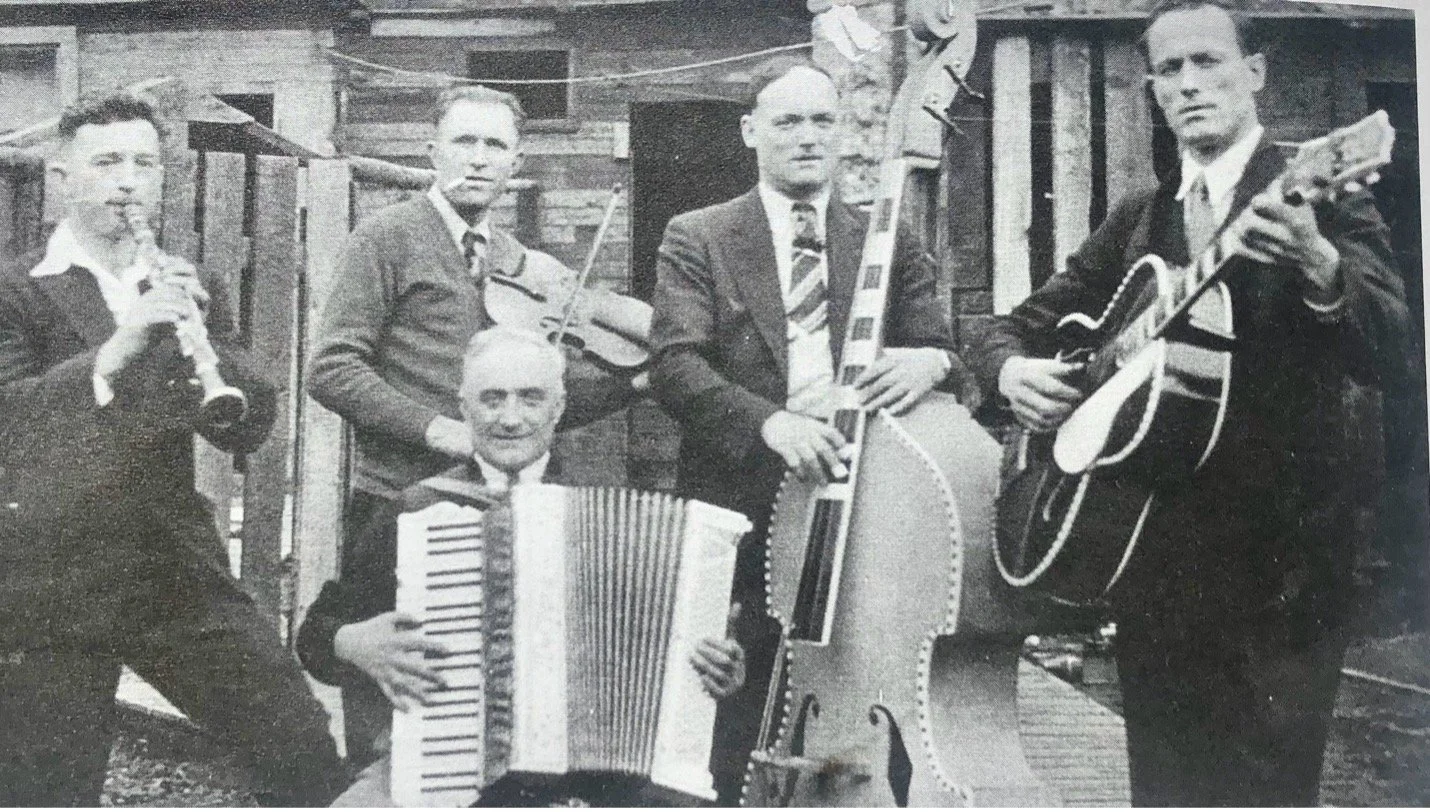
As a historian I see the importance of bringing these stories and images to light. They can warm the heart and make you smile. That recent Michel picture on facebook was of an all women’s band called the Ladies Coke Oven Band. Not sure of its legitimacy, because one of the women is holding a broom, but it was interesting to note that there were no less than five members of the DePaoli family in that photo of seven. There were many Italian families that immigrated to Michel Creek valley south of Sparwood and most brought musical talent with them. On the very next page of the book is a spectacular picture of the 15 members of the Michel-Natal Ukrainian Canadian Orchestra. Most of the musicians are quite young and most are holding either violins or mandolins. It is always nice, these days especially, to find that back then immigrated Ukrainians had blended into the community and were thriving. Directly below that image is a picture of a men’s band, its members holding a clarinet, violin, bass, guitar and the always present accordion played by John DeClara.
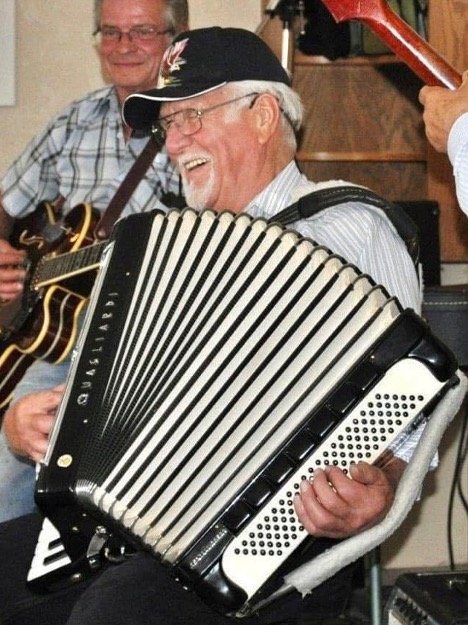
The accordion used to play a huge role in small communities back in those days and sometimes a talented accordion player was the only one supplying music at a dance. I have seen a lot of different types of accordions through the years and most have beautiful craftsmanship and lovely sound. Anyone who has ever heard Earl Scott’s accordion played at the Miners Club in Hillcrest knows that Earl could solo a Saturday afternoon of dancing if need be. His accordion, made in Castelfidardo, Italy, had a lovely warm, traditional tone to it. And of course Earl always participated in the annual accordion festival in Kimberley than ran for almost 30 years. It was at that festival, in 2005, that a Guiness world record for number of accordions played was set. That record was a mind numbing 644 accordions playing “Mussels in the Corner” for over five minutes. I cannot even begin to imagine this. At the very end players began passing out because the accordions had sucked all the air out of the hall.(just kidding)
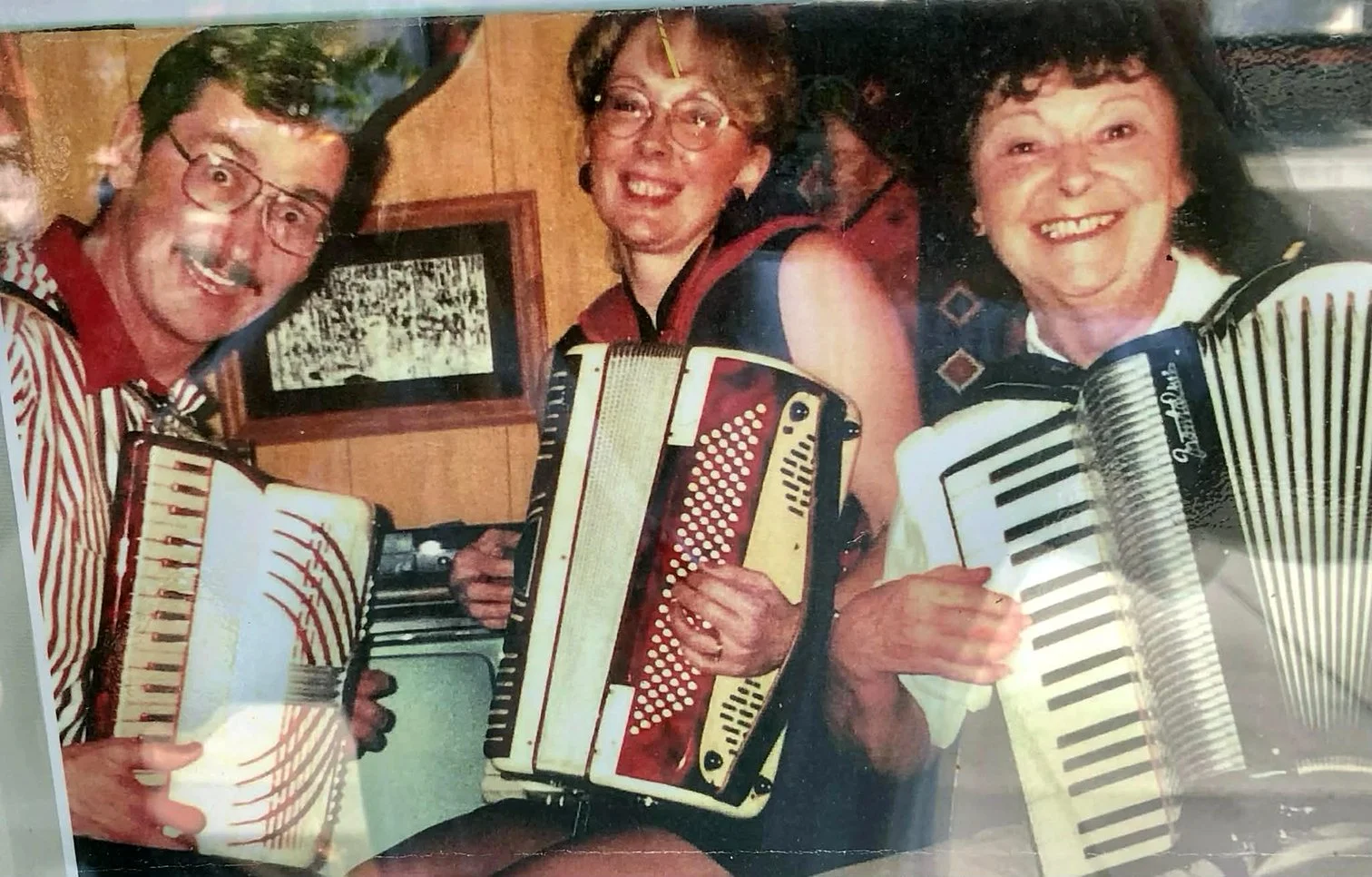
The Pass had more than its share of accordion players. What triggered me to look deeper into the story was a picture on display downtown Coleman of three members of the Michalski family, Connie, Terry and Karen, posing together with their accordions. It speaks volumes about the cultural embrace of this instrument. The family that plays together stays together.
Tommy Kropinak gave lessons here in the Pass as did Ed Filafilo. I can remember clearly Magnus Juhlin cranking up his accordion in our living room on a Saturday night. There were several women players and teachers here as well like Jane Anne Reimer and Bernice Navratil and teacher Jenesse Fumigalli.There are too many to list but Karen (Michalski) Cytko shared with me that, “Every Polish & Italian family had at least one accordion player.”
There are many different makes of squeeze boxes with names like Hohner, Camerano, Roland and Beltuna to name a few. They are all fascinating to study and how someone can hit keys on one side and buttons on the other in harmony is beyond me.
There were many accordion players in the Michel/Natal area as well and they played a variety of types including Frank Kozler who played a button accordion. But there was one legendary player that was remembered in the Michel Memories book whose story made me chuckle. So I will share it with you, in its entirety, as it was written.
It went, “Come Saturday mornings a certain individual could be seen walking the streets of Michel, Middletown and Natal. He wore a long tweed overcoat, had wire-rimmed glasses and occasionally carried a black leather binder tucked under his right arm. He didn’t wear a hat because the manufacturers didn’t make a size large enough for his head. He would work his way from Michel to Natal teaching accordion lessons along the way. Gordon Tapay and Stelio Tedesco were two of Jimmy’s students. After each lesson parents would offer him a beverage which he would never refuse-especially the spirited kind. He would chat and drink with each family, making him increasingly late for the next appointment. Near the post office, he could be seen checking his watch and trotting thirty-odd paces. He would then slow down, look at his watch again, and then trot another thirty-odd paces. I don’t know who had the last lesson of the day but I am sure that he or she never learned to play the accordion as well as the day’s first student!
Jim would also play the accordion for wedding dances. He usually played solo, but was occasionally accompanied by another accordion player. Jimmy would be given a few pints of beer between songs. By midnight Jimmy would be defying gravity. He would be seated in a chair, his entire body leaning to the left at a forty-five degree angle and with each outward pull of the bellows, the angle would increase. But he never did fall off the chair. His polkas would begin to have the same tempo as a waltz. This was a signal for guests that it was nearly time to go home.
Seriously though, Jimmy was an excellent musician and a highly intelligent person as well. It is said that, one day, a big dark Cadillac pulled up in front of the Bosworth residence. Two men dressed in black suits, knocked on the door. Once inside, they talked to Jimmy and his mother and made an offer they couldn’t refuse. Supposedly they all signed a contact in which Jimmy would receive a large amount of cash if, after he passed on, he donated his brain to scientific research. Some say that his cranium is now in a (large) jar of formaldehyde on a shelf at the Smithsonian Institute. Others say that it’s somewhere in some prestigious medical lab.
There are undeniable historic cultural connections between both sides of the border. In future issues I hope to explore some of them. If you have memories or photos or names of players you would like to share please send them in to the Pass Herald or to me at passbrat@gmail.com. This story deserves followup.