

Looking Back: Bellevue Mine Volunteerism
Last weekend our community acknowledged our amazing volunteers and the dedication they display by being there for the causes that help keep things running around here. The occasion was the annual municipally sponsored volunteer dinner and at that event the one and only Anita Ferguson was called up to the stage for the volunteer of the year award. You just don’t get any better than Anita when it comes to commitment to community. There are so many that are pitching in but it is becoming tougher and tougher as interest in volunteerism is waning. People burn out and interest groups are always looking for new blood.
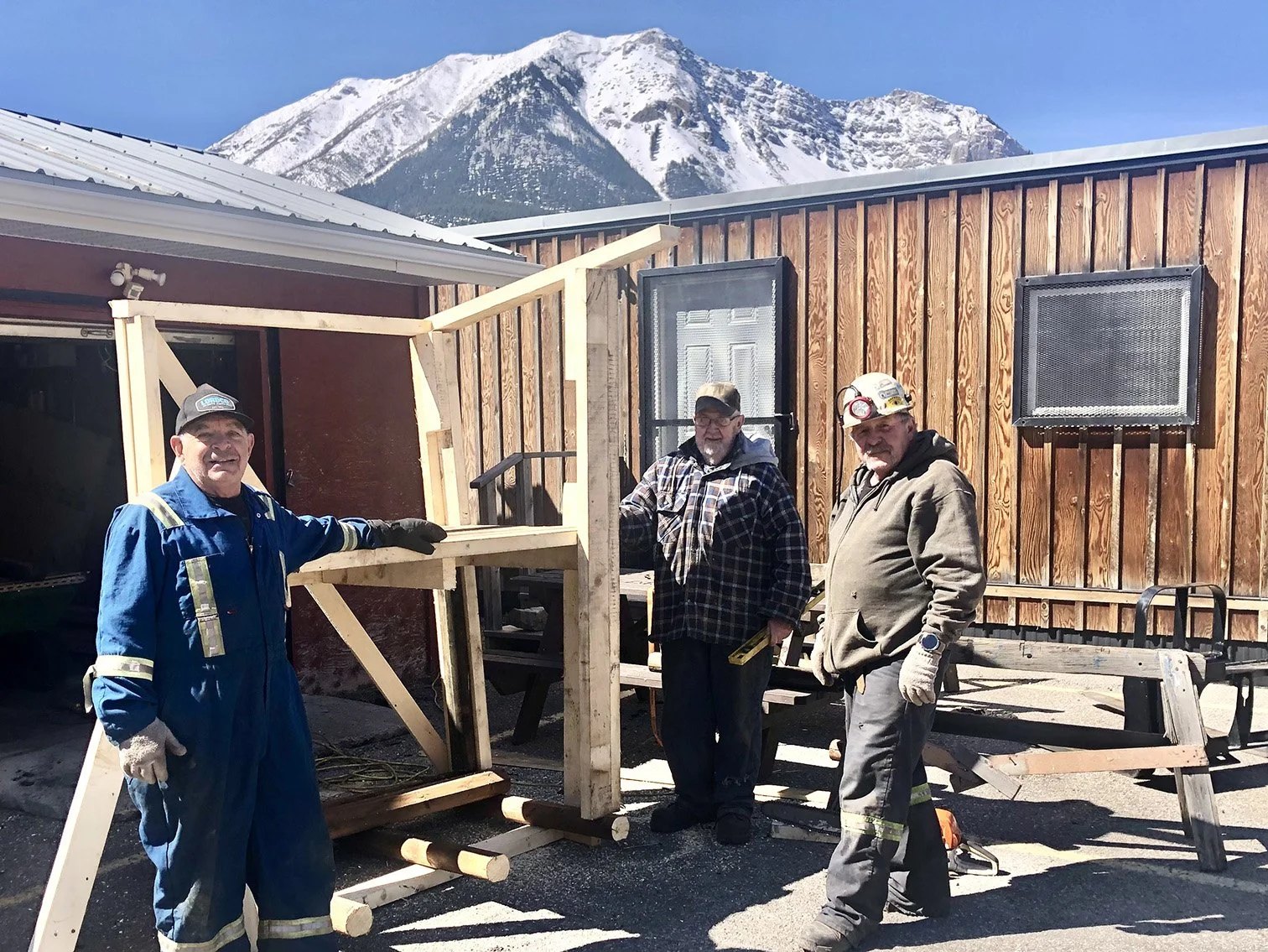
Just days before this event I went on a special tour of the Bellevue Underground Mine with another volunteer champion, Diane Peterson. Diane and I go way back to when I was a mine board member and chair of the mine and she was executive director there. She ran the tour show for many years with a troop of interpreters, managed the gift shop and oversaw the finances. Her volunteerism is renown and unwavering. When Diane left the mine she found she could not let go of it and for many years has worked through the winter with three amazing men as they continuously upgrade and stabilize this amazing piece of Pass history. Diane refers to herself as a gopher for these three but her knowledge and enthusiasm help make that program of restoration go around.
We donned lamps and hard hats that day so I could see the incredible amount of restorative and stabilizing work that has been done there. That work has been preformed principally by those three men I mentioned, whose volunteer dedication and commitment to this mine is absolutely over the top. Their names are Terry Vosler,Terry Barlow and Rick Rivette and they are a really hard working team. I did a little math to get an idea of just exactly what that volunteer service might look like as a number. It goes like this. Three guys, 6 months of the year, twice a week at 7 hours a day for over 13 years now. That my friends adds up to 14, 196 hours so far. And over and above that Terry Vosler has spent countless hours recently giving the outside tour buildings a solid new facelift.
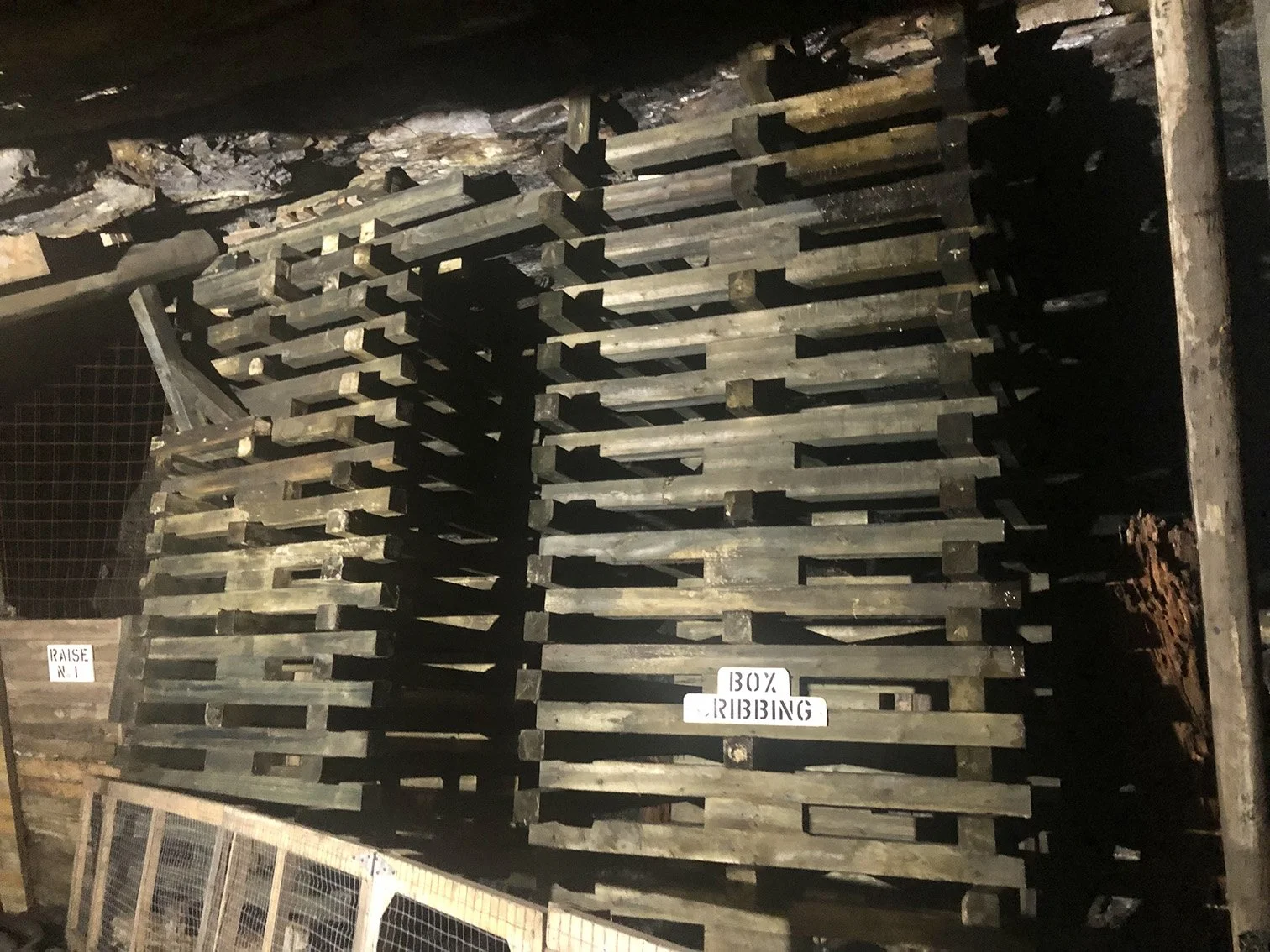
Most of the underground work being done is very physical and involves among other things, replacing timbers, checking wedges and stabilizing areas with huge wooden cribs.
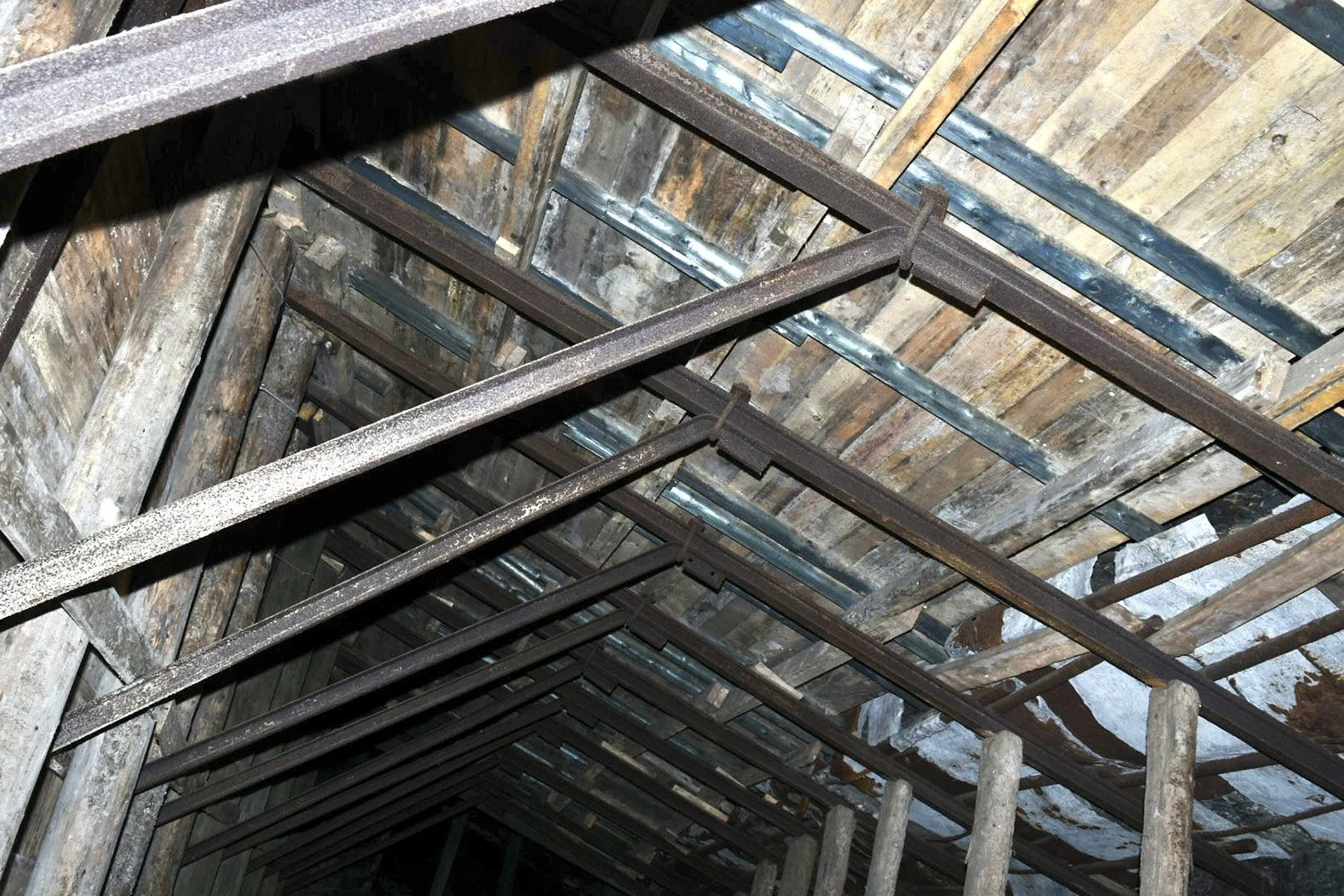
Cribbing is 6 by 6 or 8 by 8 square cut timbers, stacked in a rectangle as a secondary roof support. One encounters an amazing double box cribbing at the first bend in the entry of the mine and it is jaw dropping. It gives one a nice sense of security to walk by those massive stack of what sometimes is referred to in mining terms as a “pig pen. There has also been extensive roof work done with planking to ensure nothing can peel off that sandstone roof.
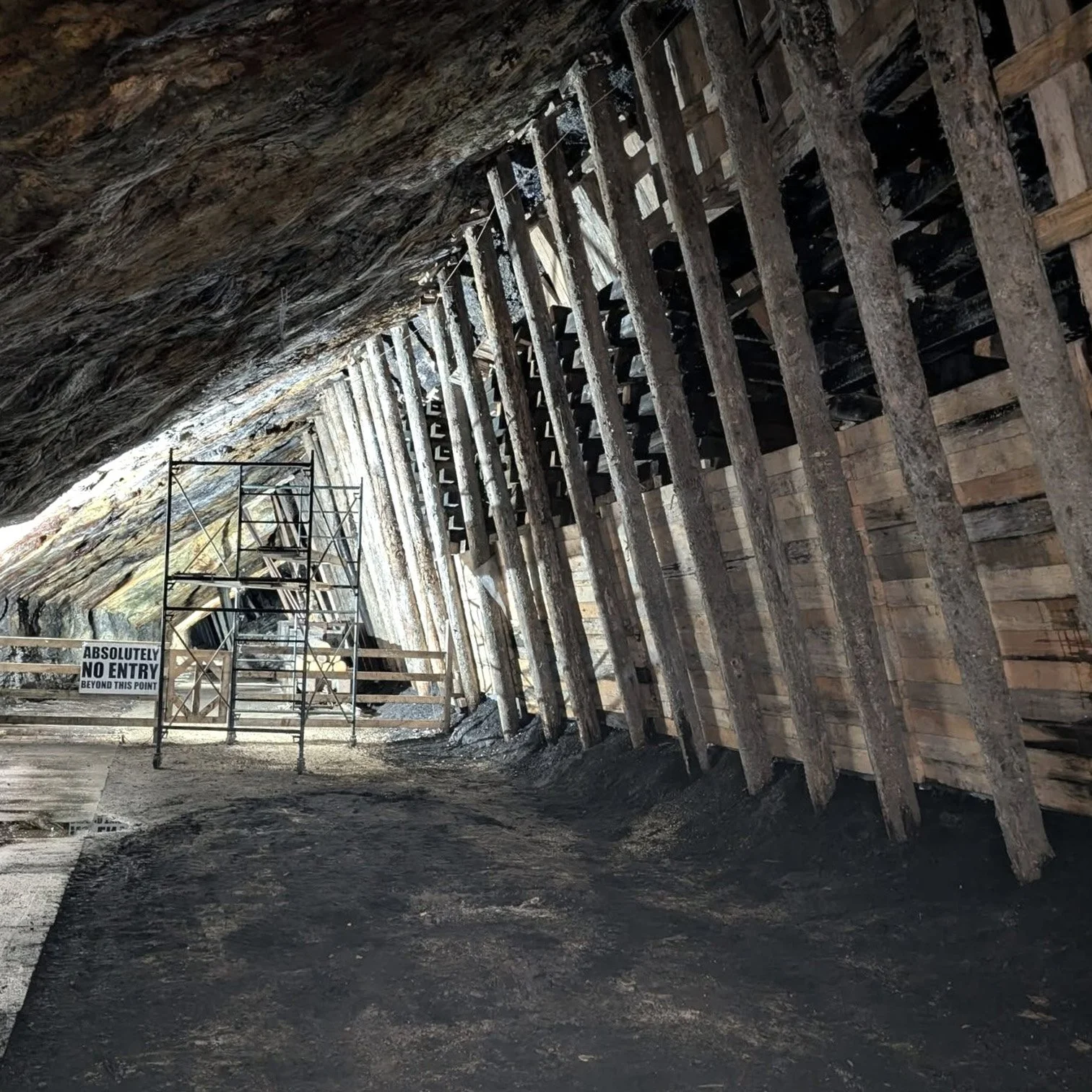
The lagging (inch thick planks) that can be seen in the high side walls of the entry have all been replaced. These are commonly stacked bottom to top between each set of timbers. Their job is to hold back the coal between the timbers and in some cases the guys have had to go well back behind the timbers to stabilize some areas with more cribbing.
I had occasion to work underground in this kind of environment many years ago in Vicary Mine so I am quite familiar with how it all goes. On observing the work done in this mine it becomes very apparent that there is a high level of expertise and craftsmanship being used.
Pretty much all of the high side timbers have been replaced and this year a new innovative technique has been applied to them . At the bottom and at the top, a wire cable has been strung and tensioned so that should any timber come loose the cable and the nearby timbers will keep it in place until it can be rewedged. This is rare event because of their continuous monitoring but it gives yet another level of security. The safety of the mine is rock solid, so to speak.
Since these timbers are 16 to 18 feet high, scaffolding is used to put timbers in place or to safely access their tops and make sure the timbers are secured in place. This is done using large wooden wedges hammered in between the top of the timber and the roof. It is an old technique that has its own level of expertise. Diane showed me something I had not seen since 1967 when I worked in Vicary. It is a set of measuring sticks used to calculate the length of timber needed for a high side leg. Two sticks slid together until between the two of them you have a measured distance from the entry floor to the roof. An old technique but as they say, if it ain’t broke don’t fix it.
The last couple of years the team has done a huge amount of work well past the restrictive fence that one finds at the end of the tour. From that “ Absolutely No Entry Beyond This Point” fence, visitors can get a good look at what an unrestored entry looks like and comprehend how much work it takes to secure every foot of it. In that restricted area is a bit of track and a coal car and a timber car with a rack of timbers on it. Those cars were used to transport thousands of timbers into the mine for placement.
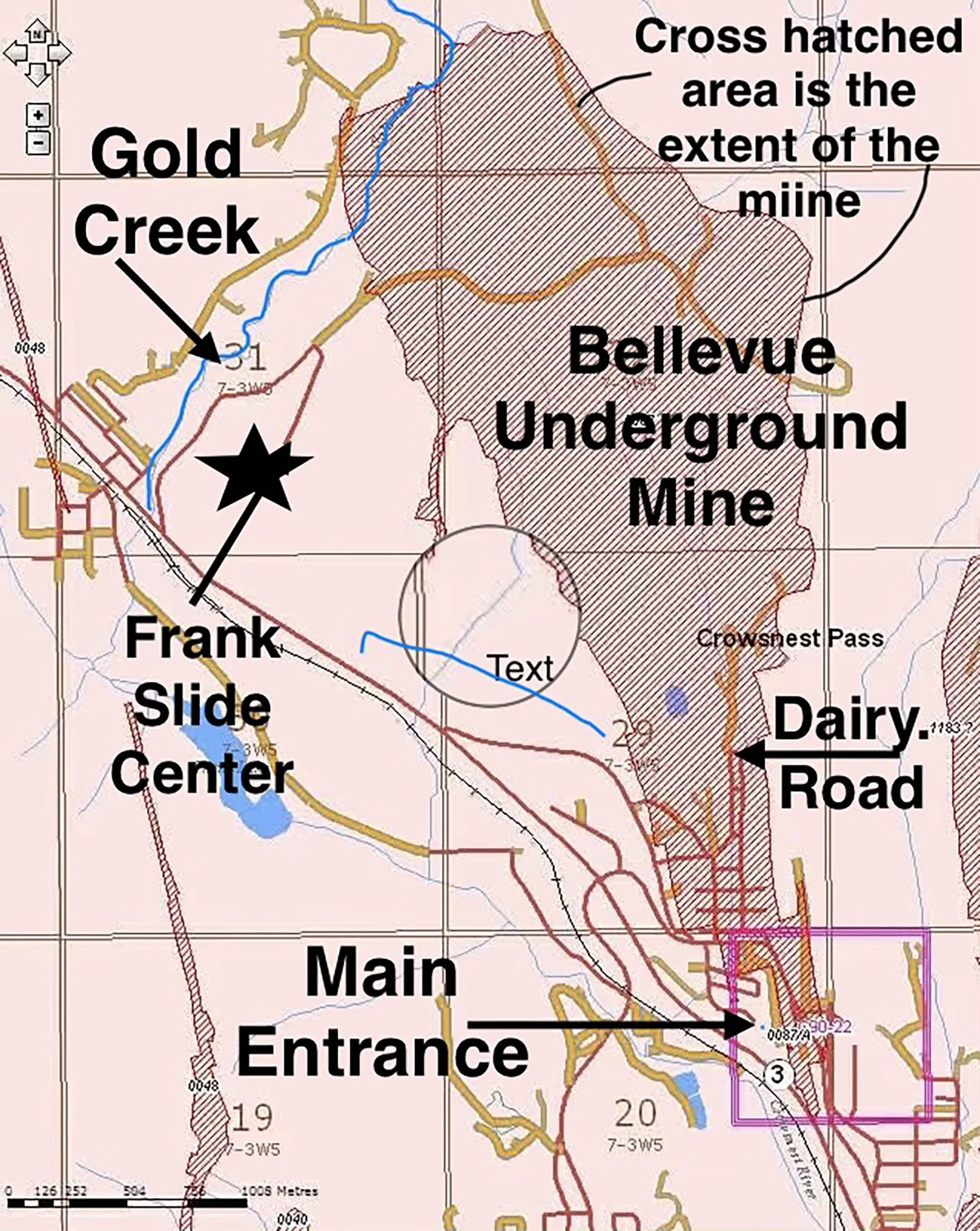
A bit of elaboration might be in order here as far as the mine’s expanse is concerned. It might surprise you to know that the mine passes under Dairy Road and goes for a mile and a half further north and west to at one point under Gold Creek. That is a huge of development and entries and I hope the sketch I created helps you grasp its extent.
The tour experience is but the tip of the iceberg or in this case coalberg. My Cape Breton grandfather worked 26 years in the Bellevue Mine and sometimes I try to imagine him finding his way into the working place he was assigned, deep into the bowels of the mine. And incidentally, you didn’t get paid for the time it took getting there, however long that was.
The Bellevue Mine is just about ready for another year of leading visitors into only the very first thousand feet of this amazing mine. But in that thousand feet all there is to learn about the miner’s experience is unfolded, with unique presentations of miners at work and a functional load-out chute with a coal car ready for loading. I did that exact job and a college student, perched above the entry at the check board of an operating chute, waving the train operator to push another car under the chute to load that hard earned coal coming from working pairs of miners, hundreds of feet up the pitch of each working room. If you have never done the tour, perhaps you might find it a very worthwhile experience to step into this historic world, one in which miner’s worked for decades to make a living and help build our communities into what they are today. May long weekend the mine officially opens for tours. Put it on your to do list!
Authors Note: I would be remiss if I didn’t acknowledge the many other volunteers who worked for years to secure the mine as a safe place to tour.. Guys like Ron Hruby who did huge work putting his mining expertise to work there. And of course the king of the Bellevue Mine, Roy Lazzarotto, the man who started it all and originally secured the place with years of hard work.