Looking Back: A Mini-World of Troglobites
Ever since I was a youngster I have had a fascination with caves. It has never left me and I find myself inevitably drawn to any dark shadow or interesting feature of any depth in a rock face. I guess that is why I didn’t “bat” an eye when I went to work 2 1/2 miles underground in the Vicary Mine while in college. Spelunking is probably a in-bred after effect of my coal mining family history.
Any spelunker worth their salt is aware of the amazing diversity of life to be found in caves. In this environment, that appears less than hospitable to life, can be found things that creep and crawl, slither and scuttle; swim and fly.
The relatively new science of studying cave fauna and unlocking their secrets is known as biospeleology. Biospeleologists decided, some time back, to classify cave creatures in three categories: troglophiles(cave lovers like spiders), trogloxenes(cave visitors such as bats or nesting birds) and troglobites(cave dwellers that are full time in-habitants).
The reason I am now more conversant about this particular bit of science has to do with a remarkable discovery I made last fall. While I am not known for my hiking abilities I cannot resist the chance to climb into any type of cave or overhang to look around. These days my climbing is relegated to fairly level surfaces but if it appears there might be something subterranean to explore at the end of the effort, I’m in, so to speak.
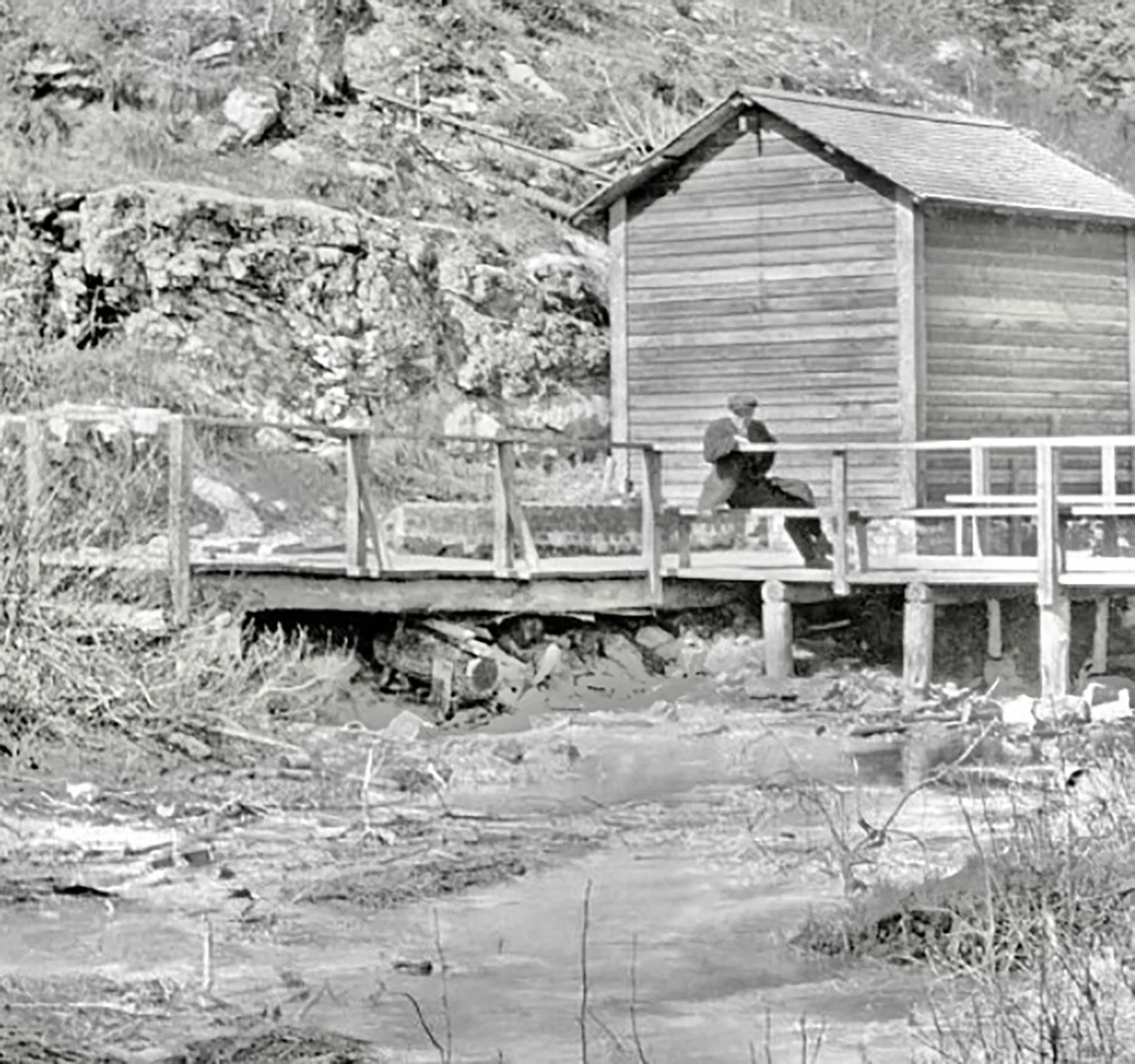
Like many Pass residents, I have explored around the well known sulphur springs that boil up out of the base of Turtle Mountain. Late last October I found myself back there again only this time scrambling a little bit further along the toe of the “mountain that walks”. Late fall is a good time to go exploring for things otherwise hidden by brushes and tall grass. On this occasion I accidentally found a rather innocuous looking little overhang that for the most part is usually completely obscured from view. My clue that there might be something interesting there came from observing several bumble bees emerging from a small black hole in the decaying autumn foliage.
After gingerly pushing back the vegetation around it, I did indeed uncover a shallow overhang about the length of my body in depth. Of course I could not resist a tentative probe but I must tell you that it takes a bit of nerve to crawl into a space like that not knowing what one might find!
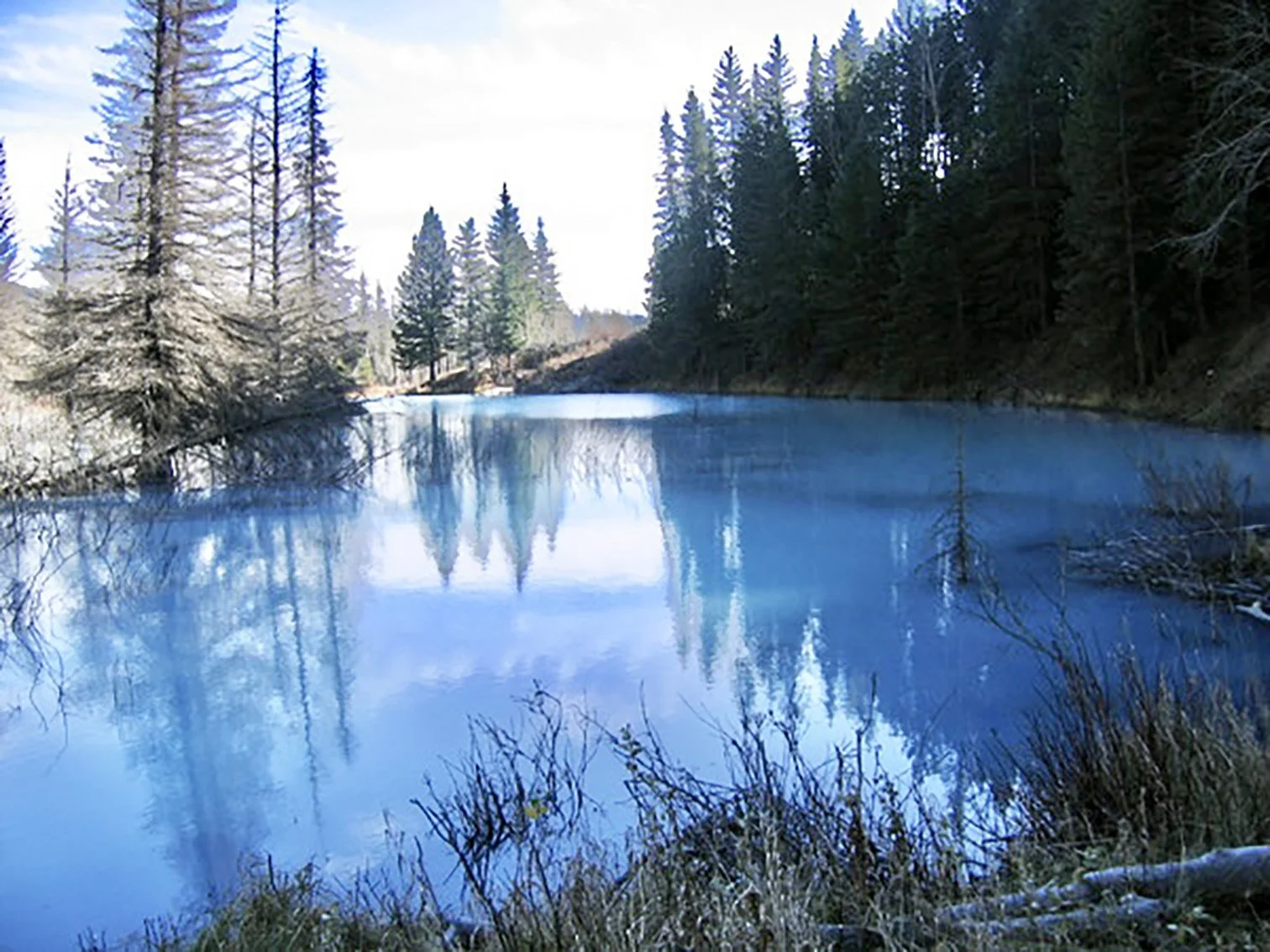
I always carry a high power lamp with me and what my torch revealed that day was, at the back of this hidden brow, a small angular shaped pool of dead calm pale blue water.
There was, like the nearby springs, a slightly sulphurous smell to the water and its temperature appeared almost lukewarm . This I surmised without dabbling into it as the inside of the cave was considerably warmer than outside. I was hesitant to test its temperature because I feared I would disturb sediments and murky it up. Because of the waters clarity and stillness my powerful lamp was able to penetrate to some depth.
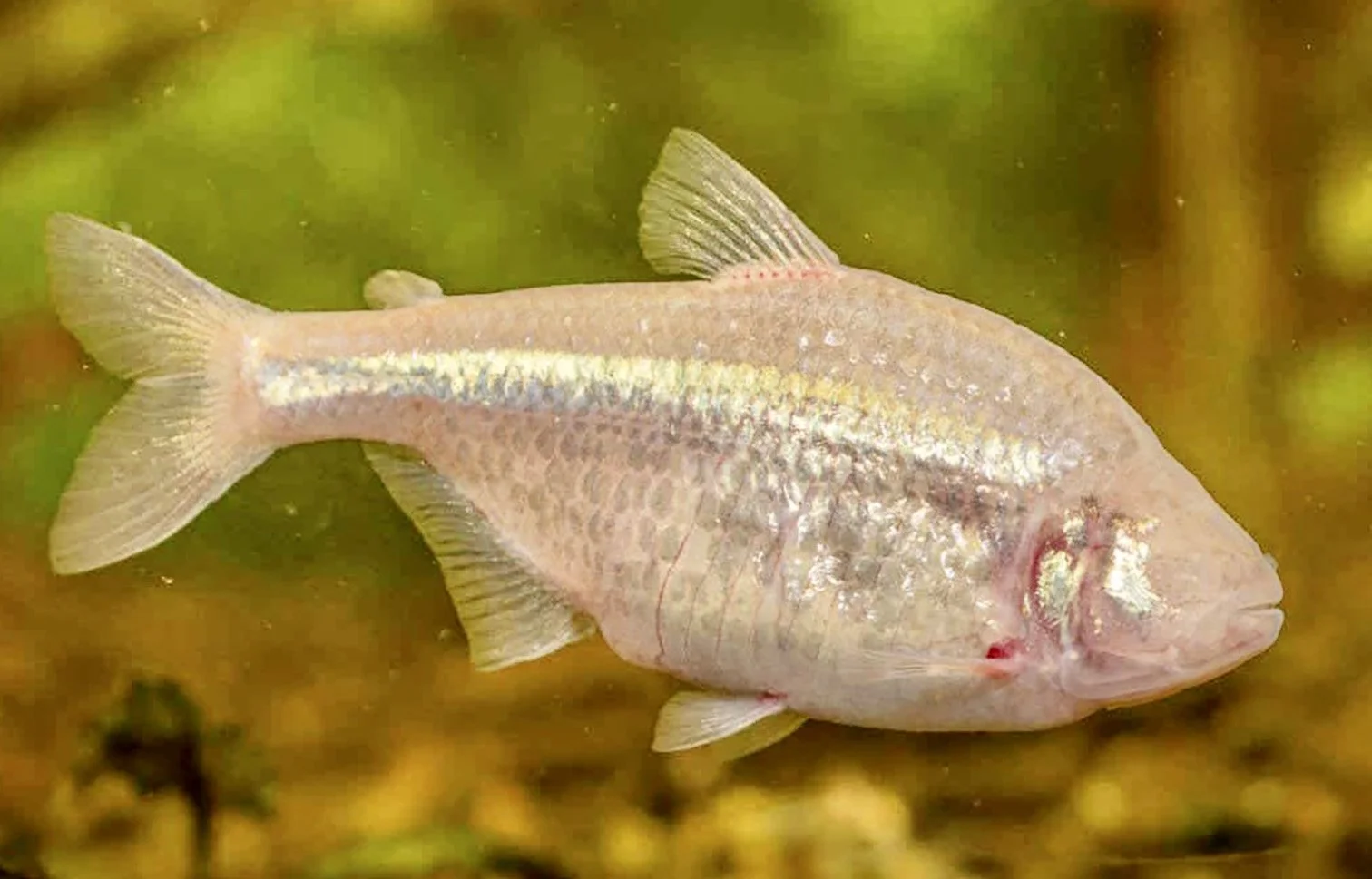
To my utter astonishment its beam illuminated a couple of pallid looking little fish, about three inches in length, just sort of hanging there in the water. These fascinating creatures appeared unperturbed by the light but when my lamp accidentally touched the water’s surface, the disturbance caused them to flit away towards the darker edges at the back of the pool.
Determined to get a closer look, I lay quietly, for what seemed like an eternity, beside the pool with my hand laying open under the warm water. This is sort of a modified version of the Scottish tradition of “guddling”, whereby the trout is hypnotized by gentle slow gill massage and then quickly flipped out of the pool. In this case it could be said that I was the one hypnotized, by the thought of catching one of these creatures. Eventually, using a great deal of patience, I was able to sweep one of those diminutive critters out onto the edge of the pool. I then quickly slipped him into a small zip lock bag, now devoid of the egg salad sandwich it had held, and sealed it up.
Closer examination outside the cave showed it to be an almost colourless fish with a large head and puffs of fatty tissue where its eyes should have been. I was stunned to say the least and let out a huge excited holler. But then I thought to myself, perhaps I should keep this on the QT for now. This was by any stretch of the imagination a rather momentous discovery, as blind cavefish or Tetra as they are called in Mexico, cannot exist in colder Alberta climes. But then there is the factor of the constant warmth of the continuously surfacing warm mineral water that this small cave fostered.
That very night I went on the Internet searching for information on this amazing little creatures. Typing in key words like spelunking and caves the Net came up with an unbelievable 889 entries including everything from cave tours and camping gear to an up and coming national cavers convention at Carlsbad, California.
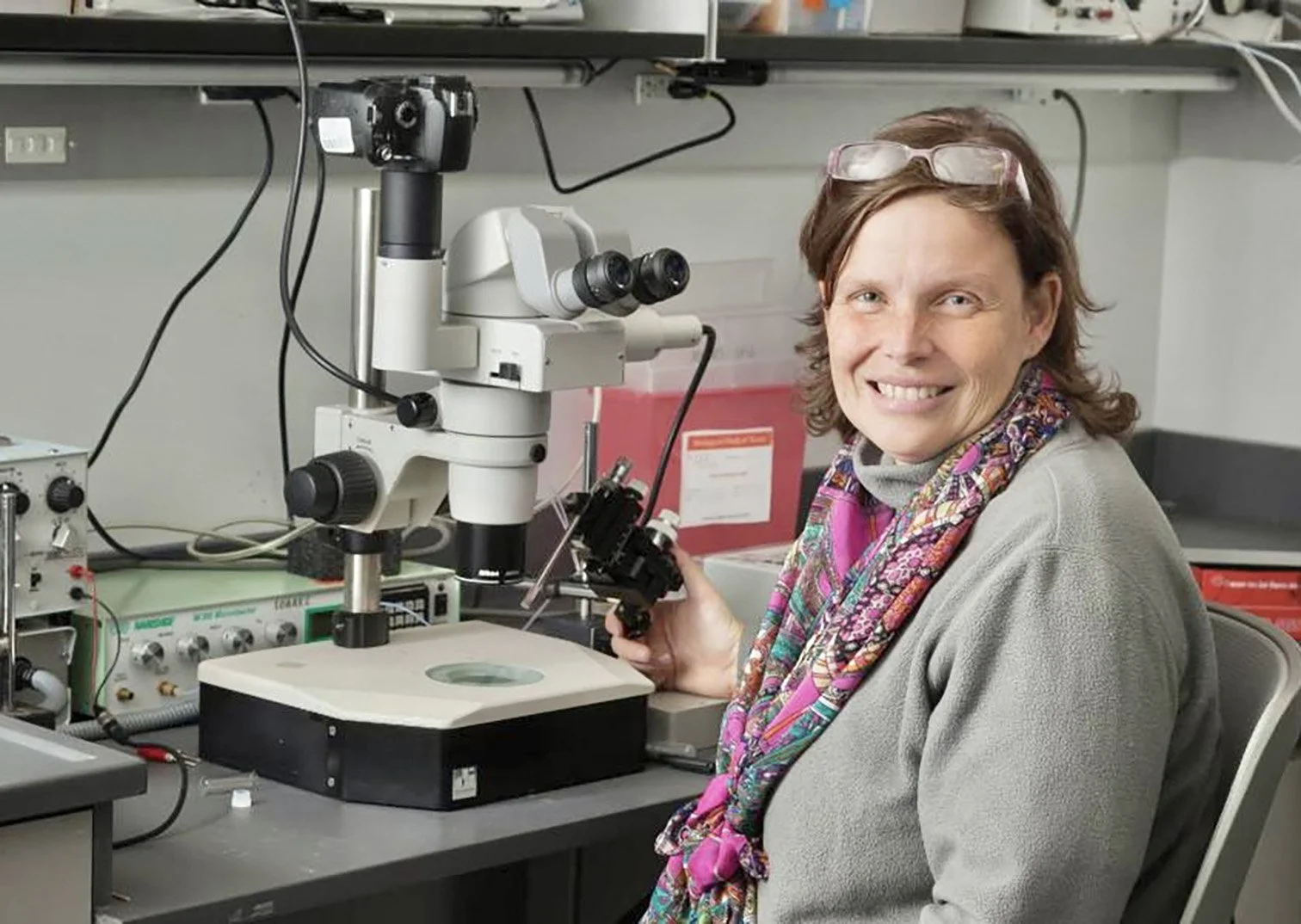
Eventually I came across the term biospeleologist and specifically, information on a Dr. Joshua Gross of the University of Cincinnati’s Department of Biological Sciences, who is conducting studies on cavefish. Specifically their ability to survive in low oxygen environments. I was redirected to one Dr. April Pazzo, a specialized scientist focusing on the evolution or should it be “devolution” of cave-fish. I emailed her and sent a brief description of my mystery fish and got a response early the next morning. Dr. Pazzo was astounded at me finding a specimen so far north and suggested I have it vacuum sealed and shipped to her private lab . You can just imagine the look I got when I hurriedly asked for that specimen to be double vacuum sealed at the IGA.
Just last week Dr. Pazzo emailed me her findings. That little specimen is in fact a blind troglobite she called “typhlichthys subterraneus” and is apparently quite rare. Pazzo found minute traces of partially digested miniature crustaceans and water fleas in the specimen’s digestive tract. My descriptions of the areas topography and the Turtle Mountain geology led her to surmise the following: “It appears that the presence of massive faulting in your Turtle Mountain and the existence of sulphur springs at its base has provided the evidence for a rare warm water vent in this small cave. That is the only possible way for these fish to have survived since the last glaciers withdrew from the Crowsnest Pass to the Rock Mountain Trench. I am surmising that its original inhabitants were trapped there then, somewhere around 10,000 years ago. That they survived and evolved, as most cavefish do through time, are an indication of how stable the areas geology has remained”. Ah well, I didn’t mention to her the catastrophic collapse in 1903 but that was way off to the east.
She went on further to explain why and how a “blind” cave-fish could be so sensitive to disturbances as mine had been. She indicated that:”Along the head and body of fish run lateral ridges, which are actually rows of sensory organs known as neuromasts. From each neuromast ex-tends a tiny, jelly-like rod, called a cupula, so sensitive that it responds even to the water movement caused by the approach of a microscopic water flea. To its great ad-vantage in the darkness, the cavefish possesses about four times as many neuromasts as an ordinary fish and its cupulae are twice as sensitive. This sensitivity allows it to sense minute underwater movements of the tiny crustaceans and water fleas that it feeds on.” So it seems that this nosy caver has happened upon a find a lot rarer than Lemon’s gold. A find that I have been advised to not reveal the location of until the U of A Department of Biological Sciences has had time to classify. Perhaps I will have this species named after me.
Authors Note. Here is another interesting fact that Dr. Pazzo shared with me.
“The cave dwellers are born with eyes but then undergo developmental changes so that the eye basically dies as the fish grows. The lens atrophies and is genetically programmed to die, then the whole eye sinks into the orbit and disappears. The cave dwellers are programmed for this cell death.