

Looking Back: A Michel Wartime Memory Recounted
The following is a reprinting of a profoundly interesting submittal to the now defunct Elk Valley Miner in 2011. The introduction below the title of the article says.
“Compiled and written by Harold Travis (S.S.M . CP).”
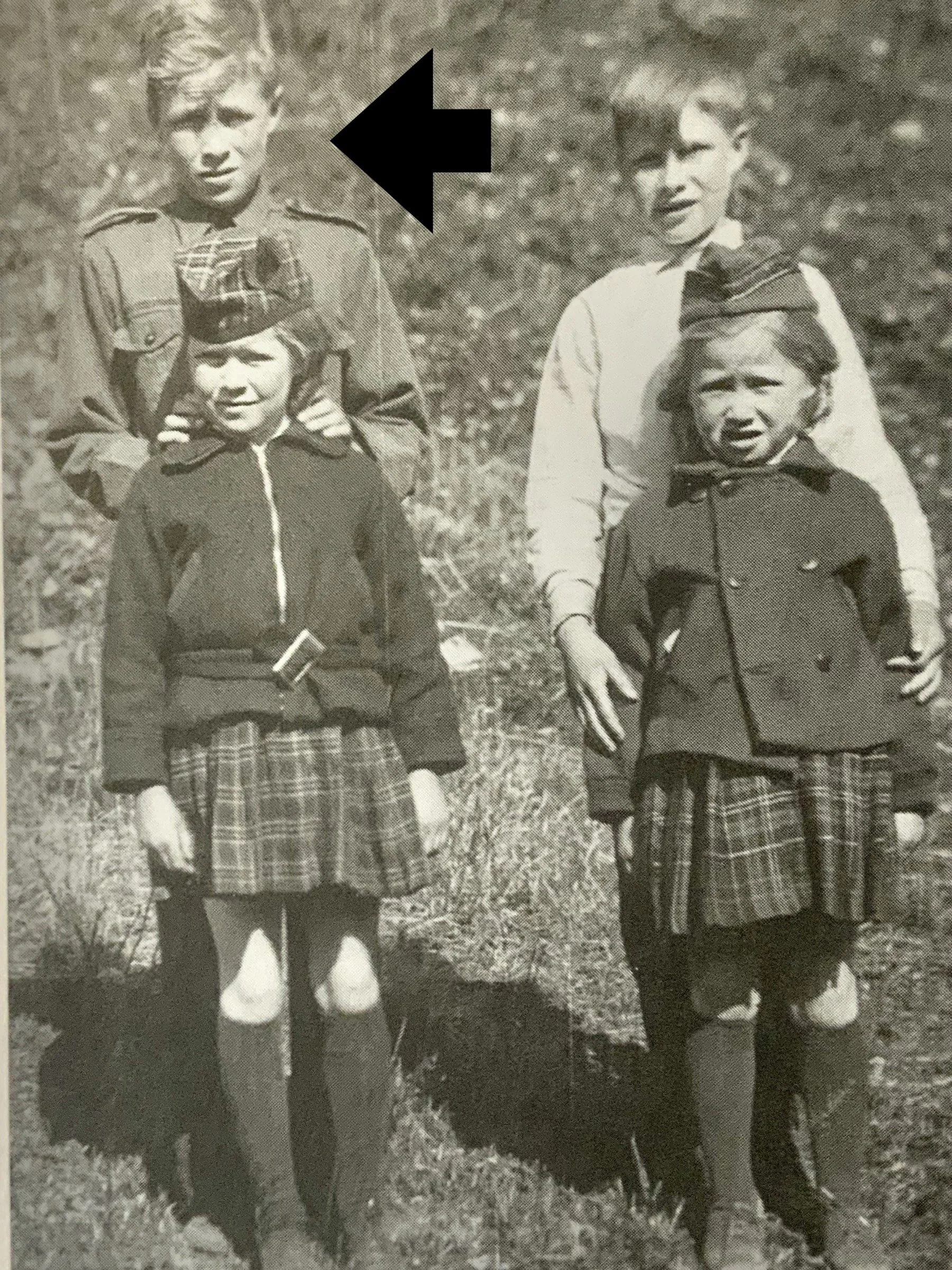
But before you read his offering I would like to share some of the Michel/Natal Travis family story which is huge. Harold Travis was one of seven brothers and two sisters that were born from Joe and Jane Travis, who came from Haydock, Lancashire, England. Joe came to the Michel Creek valley in 1905 and one year later his wife Jane and seven of their children, ranging in age from one to fifteen, came by boat to Halifax and by train to Michel. Just contemplate that journey if you will . A whole family on the move, half way round the world. Jane, Joe’s wife, recalled that at Frank they had to get off the train and walk through part of the slide to another train on the other side. This tells me that in 1906 the original rail line still had not been totally re-established.
There is a wonderful book on all things Michel/Natal that is called “Remember When” and its 600 pages of history is an all encompassing compilation of the stories of these remarkable communities and their families.
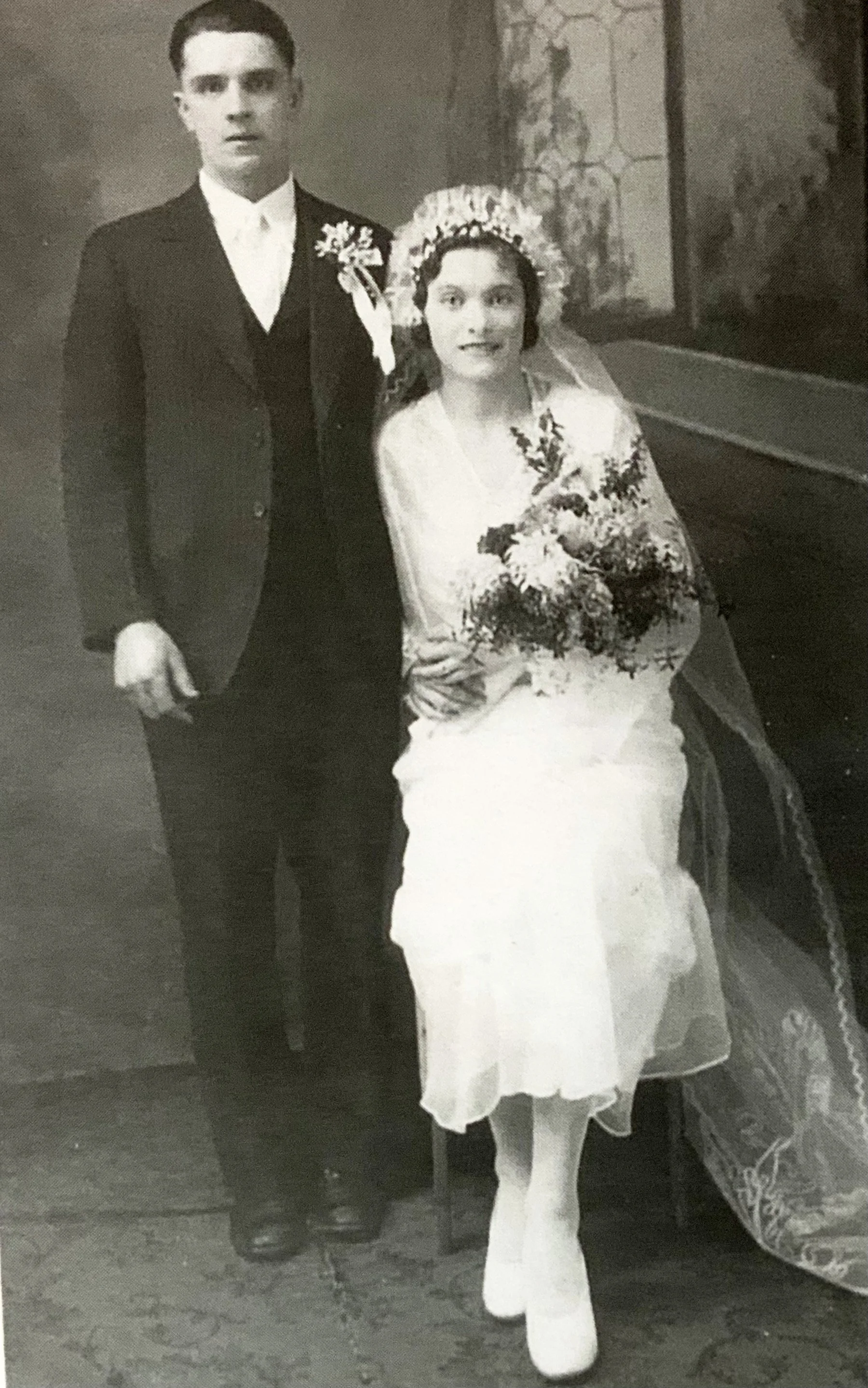
Within it are no less than nine full pages of text and pictures outlining each of the Travis family member’s history. Harold, the author of the piece below, was born in 1912 , and was the last of Joe Travis’ seven sons. Like most young men at the time, on reaching the age fourteen, he went to work in the mines. No less than four of the Travis boys signed up for and returned from the First World War. Harold was too young for that war but ultimately enlisted in the Second World War in 1940 but could not pass the physical because of a broken ear drum. Harold married in 1933 and lived in what the ‘Remember When’ tome referred to as the “honeymoon apartments”, (Ungaro apartments next to the Natal Police Station.) In 1944 they moved to what was then referred to as Snootyville (Sparwood’s unofficial name back then). This name made me chuckle. So here then is Harold Travis’ offering.
“My God! Three shorts and a long” signal V for Victory.
The mine whistle at the Michel Mine blared a long blast. A 17-year-old lad stirred in his bed and glanced at the clock on the bureau. Seven o’clock! Damn whistle, he thought. Seven days a week we live by that cursed whistle. The only exception was a disaster underground. Then the whistle would blow continuously (heaven forbid). The day was May 8th, 1945 and for some reason there was no school that day.. “Ah well.” Breakfast. Toast and plum jam, no butter ( it was rationed), fresh milk from the cooler. No tea or coffee (rationing again).
Auntie Vernie had hinted perhaps some chocolate bars would be available at the Trites-Woods store. A coke and a candy bar cost 12 cents. “I guess I could afford that,” he thought.
The lad walked the several blocks towards the store, casually reading the posters on the walls and hydro poles. One read, “Your country needs you. Join the R. C.A.F.” “Ha” he thought. I already did that. He was to report for military duty on May 8th, 1945 but a week ago he received a telegram deferring his enlistment.
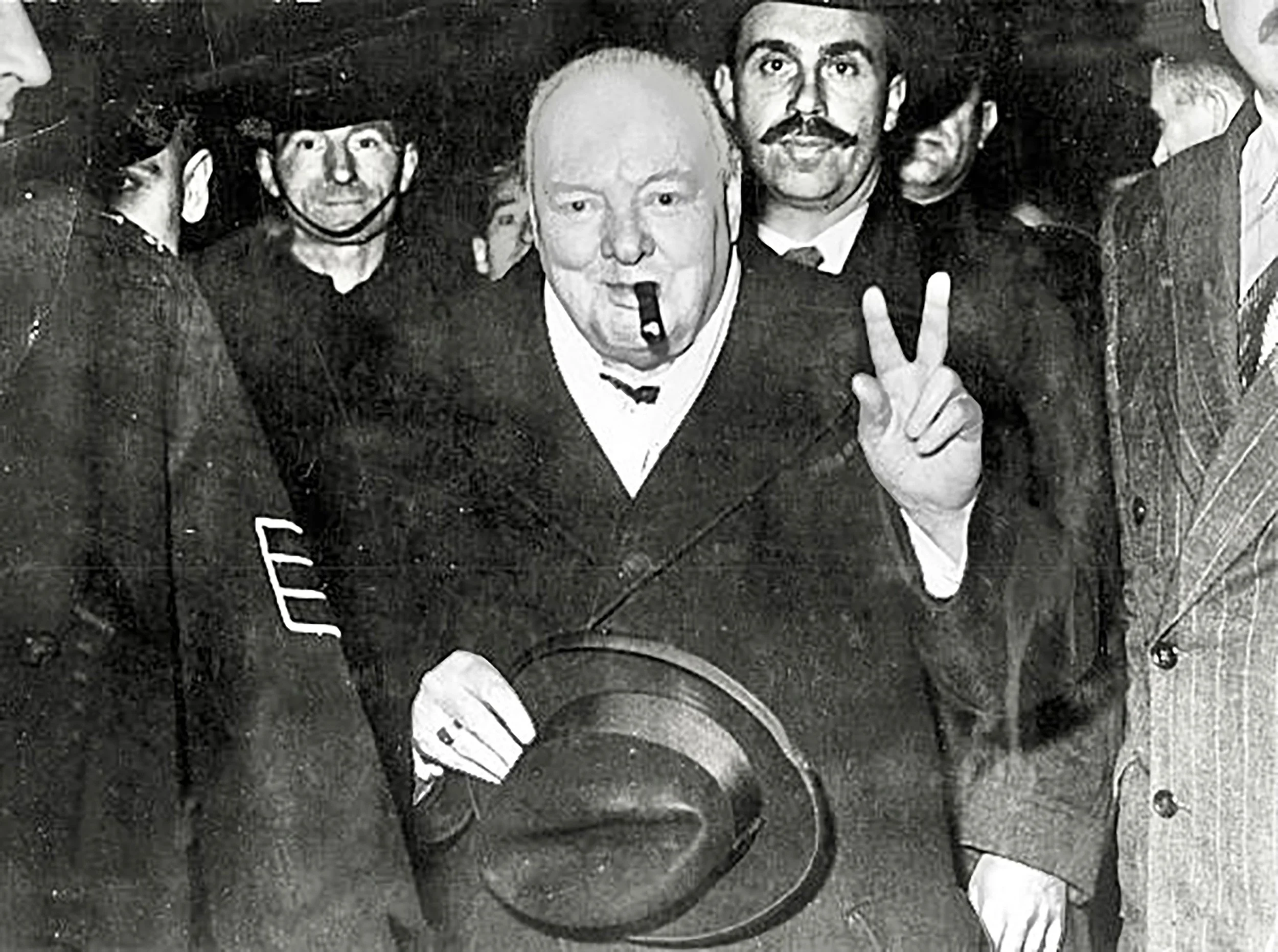
Another poster featured Winston Churchill with his black cigar, defiant scowl and his hand raised forming the “V” for victory.. and the Morse code” …- (dot dot dot dash). Another posting had a sailor, soldier and an airman with the caption “Give us the tools. We’ll finish the job.”
The lad was almost past the last houses on the front of the row. Suddenly the whistle began tooting. “Accident!” thought the lad. He looked for telltale smoke or dust from the portals of the mine but nothing was visible. The whistle continued its shrill lament for 2 or 3 minutes. The streets were full of off-shift miners. Almost without listening it registered on his mind. “Toot, Toot, Toot, Toot. “My God” Three shorts and a long. Morse code for “V” for victory. It’s over, we’ve won, he whispered to himself. A voice on the street yelled, “It’s on the radio, the war is over, Germany has surrendered.”
The crowd, perhaps from habit, moved towards the mine portal and washhouses. Suddenly, miners still in their work clothes, hard hats and lamps, were mixing into the crowd. Young people were sent scurrying home for a few dollars. The liquor store sold out quickly despite rationing. Old legionnaires quickly organized a cenotaph parade. All of the townspeople attended. Air Cadet Sqd. 196 Falcon was called out on “Parade. ”
Later that afternoon a huge rally was held alongside the old legion club. The mine barn manure cart arrived, pulled by an old bay horse handled by the Fontana and Busato boys. On the cart were three gentlemen of ill-repute - stuffed manikins of Tojo, Hitler and Mussolini, hung by the neck from the crossbar. The manikins were removed from the cart. Huge piles of firewood were piled around them and lit on fire. The fire roared as the effigies collapsed into the flames. Patriotic songs were sung, speeches were made. The lad was situated on the rear rank, left muster. He glanced to his left and there stood seven or eight women, quietly holding hands. He walked out of rank and approached them. He felt embarrassed and a little apprehensive. “I’m sorry, Mrs. Jenkinson, Mrs. Borsato, perhaps we shouldn’t be celebrating at this time,” he said. The ladies looked at him. “We lost our boys in the service,” replied Mrs. Borsato. “ Today we finally accepted that our sons are not coming home. You go have fun, but remember this day. It is and always will be the most important day any of us will ever be part of.” The lad returned to the rank, the day was finally over. The years have moved on, sometimes things haven’t been what I, the lad , thought they should be. I think back to the day, a half century ago and remember the Silver Star mothers of old town, Michel-Natal. Their faith and dignity has always been able to revitalize my love of my country of Canada.

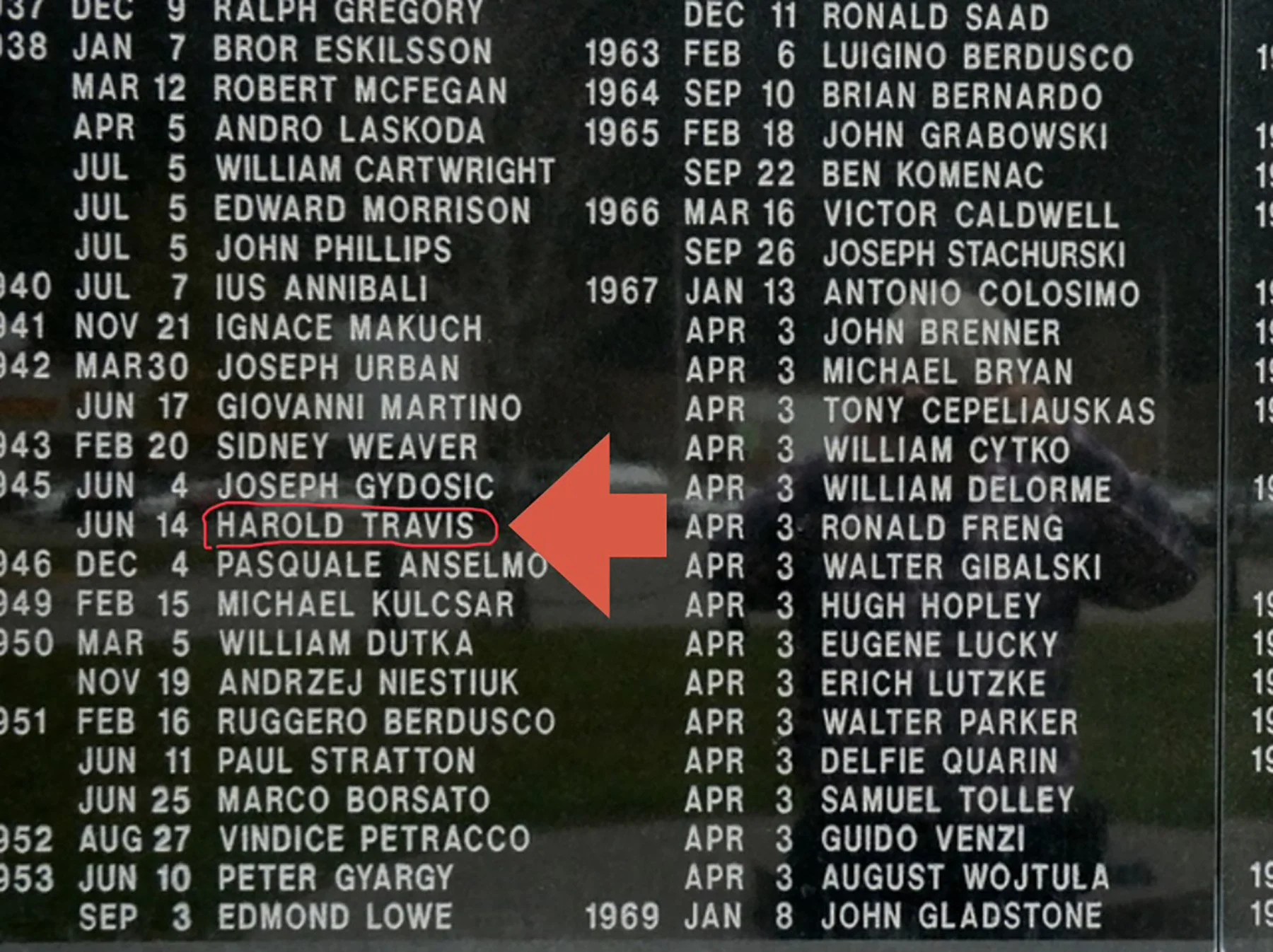
Author’s Note: There is a bit of confusing timeline in this story as Harold Travis was killed in the Michel Mines in a collapse in a long wall mining show in June of 1945. He was only 33 and left a wife Susan and a child behind. The purported writing of this wonderful recollection paints the picture of a 17-year-old on D-Day in Michel (May 8th, 1945). For Harold to have the memories that he had blended into this fact/fiction story means he was there for the glory of the end of the war and then he was gone. But there is a profound message in his last two sentences that is entirely important, even to this day.
I have not been able to verify the significance of the letters that follows Harold’s name.