

KPSquared opens seven day childcare in the Pass
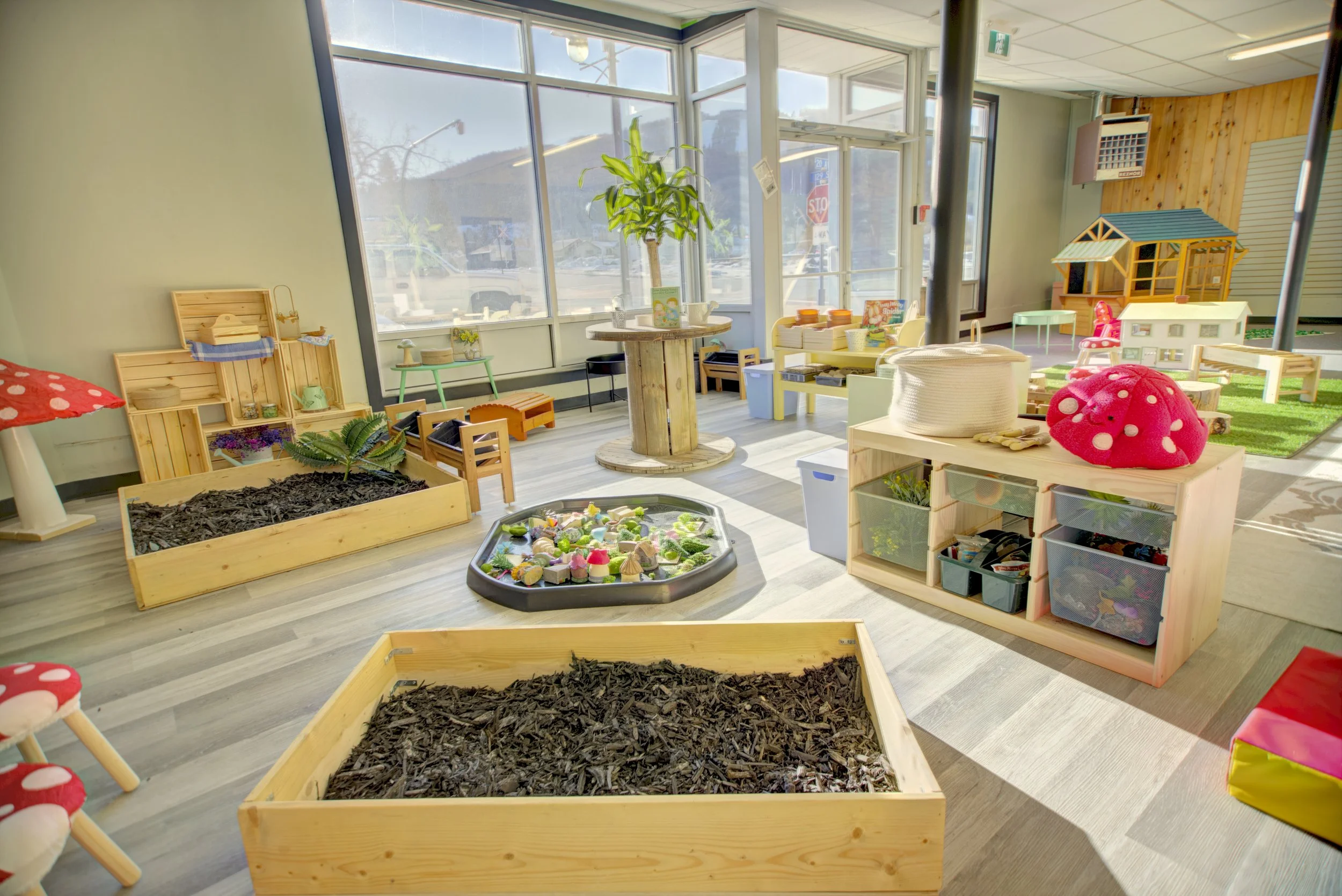
A look at KPSquared’s upcoming childcare centre, The Nest, opening soon in Blairmore. KPSquared photo
CEO says extended hours aim to support shift work, rural families and inclusive care
KPSquared planned to mark the opening of its Blairmore childcare centre with an evening grand opening on Feb. 12, positioning the project as a response to rural work realities and a bid to stabilize families through extended hours and flexible scheduling.
In an email response to the Pass Herald, Kyla Penner, CEO of KPSquared, said the grand opening would run from 6 to 8 p.m. at 12901 20th Ave. in Blairmore, with a welcome period, a ceremonial smudge and prayer, a speech from Penner and a mix and mingle until the event ends.
Penner described the centre’s approach as treating childcare like essential infrastructure, framing it as a support that allows families to function without constantly scrambling to cover basic needs.
“Families can actually live their lives without constantly triaging survival,” Penner wrote.
Penner said many childcare systems were still built around what she called outdated assumptions about predictable work and family structures.
“Most childcare systems are built around a narrow, outdated assumption: an 8–5 workforce, two available parents, predictable schedules, and no crises,” she wrote. “That’s not reality for most families especially in the everyday working class, rural, shift-based, or high responsibility communities.”
Penner said KPSquared designed its model around the family rather than viewing a child as an isolated client.
“The biggest difference in our family-centric model is this: We don’t treat the child as a standalone client. We treat the family as the unit of care,” she wrote.
She said the intent was to reduce strain on parents while improving stability for children and staff.
“When childcare works like infrastructure, parents don’t spend their energy scrambling. They can show up regulated, employed, present and that ripple effect reaches workplaces, schools, and entire communities,” Penner wrote.
Penner also pointed to emotional and relational supports as a core part of the approach, including the role of educators beyond supervision.
“Educators who understand attachment, regulation, and nervous systems not just supervision,” she wrote.
Penner said the Blairmore location would operate seven days a week from 5 a.m. to 9:30 p.m., including statutory holidays, with the schedule intended to support early starts, rotating shifts and non-traditional work patterns.
“Parents book only the days they actually need using a flexible scheduling system, there’s no requirement to pay for a full month and make it fit,” Penner wrote.
She said regular daytime programming would begin once licensing and staffing were finalized, with the full seven-day schedule rolling out immediately as part of the opening model.
“Our focus is reliability over rigidity, care that adapts to real life, not the other way around,” she wrote.
On staffing, Penner said recruitment and retention would be anchored in flexibility and respect, with scheduling accommodations designed to improve quality of life and reduce turnover.
“Educators are also able to bring their own children to work at no cost, removing a major barrier to staying in the field,” Penner wrote. “When staff are supported, they stay and that consistency directly benefits families and children.”
Penner said the registration process was meant to be straightforward, with applications accepted as soon as hiring timelines were confirmed. She said priority would be given to families whose work schedules aligned with the extended hours and seven-day model.
“Our team supports families through the process so they’re not navigating it alone,” she wrote.
Penner said parent fees would depend on age group and hours used and would be shaped by Alberta’s childcare funding system through affordability grants and income-based subsidies, depending on eligibility.
“Fees vary by age group and hours used, but the goal is consistent across our model: care needs to be financially realistic for working families,” Penner wrote. “We don’t believe access should depend on a family’s ability to absorb unpredictable or inflated costs; childcare should be stable, transparent, and workable in real life.”
Penner said the centre would also operate an Inclusive Child Care unit intended to help families whose children require additional support. She said the program would work with FSCD and other partners to translate supports into everyday care, aiming to reduce the burden on families in a rural setting.
“Our Inclusive Child Care unit exists to make sure no family in the Crowsnest Pass falls through the cracks simply because their child needs more support,” Penner wrote.
She said the model was designed to reduce the need for families to navigate what she described as fragmented systems or travel long distances for services, keeping children rooted in their home community while supporting parents to work locally.
“In a rural region like the Pass, this model is essential: it keeps children rooted in their home community, supports parents to remain working locally, and ensures inclusion is not an add-on, but a stabilizing piece of community infrastructure,” Penner wrote.
Penner said the centre’s learning environment was intended to feel like an extension of home, with calm, predictable spaces and responsive educators to support transitions between home and care.
“Our curiosity-based environment is designed to feel like a natural extension of home rather than a hard transition away from it,” she wrote.
She said learning would emerge through exploration, play and conversation, with staff following children’s interests and supporting autonomy.
“By following children’s interests and supporting autonomy, we build confidence, emotional regulation, and the foundational thinking skills children need not just for school, but for life,” Penner wrote.
The Feb. 12 grand opening is expected to introduce residents to the new centre’s extended hours model and outline how families can register once hiring and licensing milestones are finalized.