

Art Surviving War in Ukraine
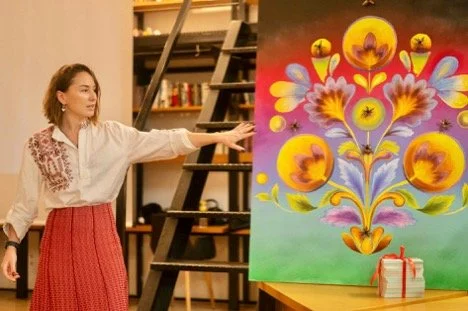
I’ve long been fascinated by the idea of telling our readers about the incredibly talented people who live in Ukraine and whose creativity is one of the country’s greatest assets. We all know that creativity plays an important role in our lives. It not only helps us cope with our emotions but also enables us to discover the sensual and divine side of us that is inherent in us by nature. Creativity forces us to think outside the box and see the world more broadly. I enjoy creativity in all its forms, and I’m glad that many people share my preferences.
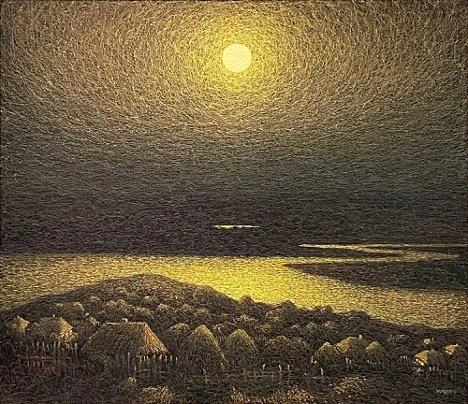
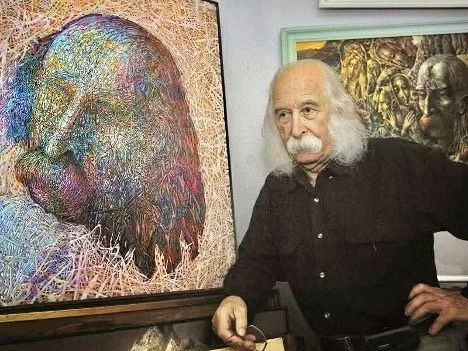
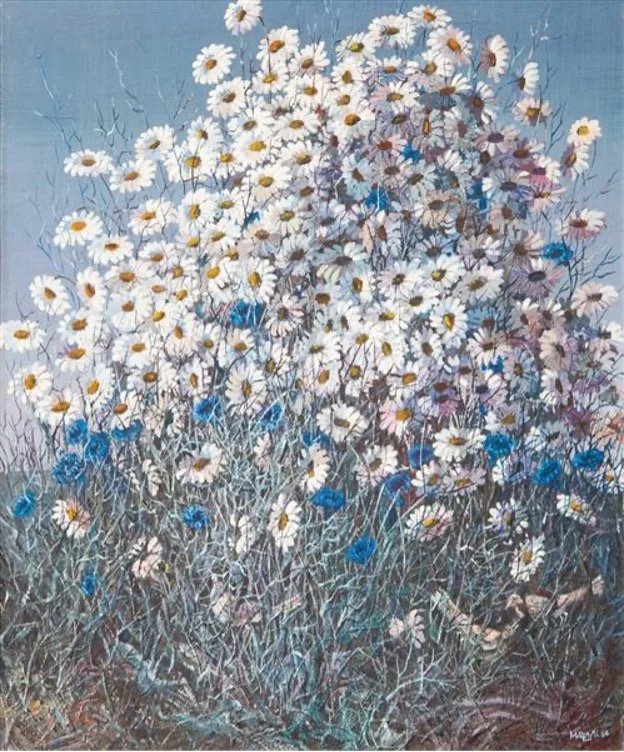
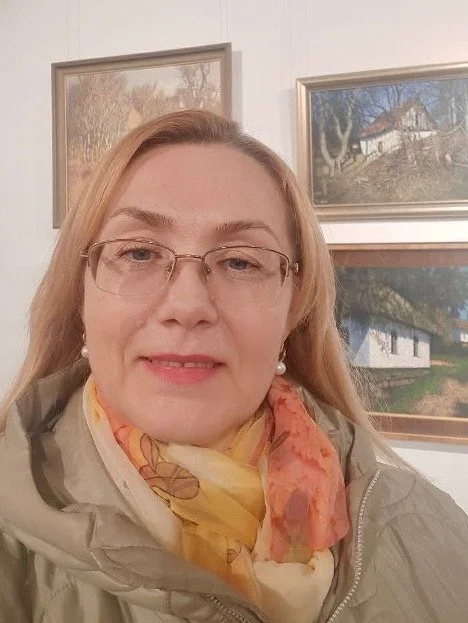
Just recently, my friend Lina, who lives in Ukraine, visited an art gallery and shared with me photos of paintings by the renowned Ukrainian artist Ivan Marchuk. This talented artist is a true treasure of our country. His life was difficult and yet beautiful. From his biography we learn that Ivan Marchuk was born on May 12, 1936, in the village of Moskalivka in the Ternopil region, and grew up in the family of a master weaver. Ivan’s childhood was poor and lacking in material comforts, but with a rich imagination and talent, he began drawing. From 1951 to 1956, he studied at the Ivan Trush Lviv School of Applied Arts, and then at the Lviv Institute of Applied and Decorative Arts. After serving in the army, he worked at various enterprises, producing billboards, illustrations, and decorative and monumental art. During Soviet times, his work clashed with the ideologically imposed system of socialist realism, and he faced misunderstanding and obstacles.
In 1988, he left the country travelling to Australia, Canada, and the USA and returned to Ukraine in 2001. Ivan Marchuk received the honorary presidential award of People’s Artist of Ukraine. In 2007, he was included in the British newspaper The Daily Telegraph’s list of 100 outstanding contemporary geniuses. Ivan Marchuk’s paintings have been exhibited in many countries, including Germany, Belgium, the USA, Switzerland, and Thailand. The most expensive painting by this distinguished Ukrainian artist is the landscape “The Moon Rises over the Dnieper” (1980). The painting sold at the Kyiv Goldens auction for a record-breaking $300,000, making it the most expensive work by a contemporary Ukrainian artist.
Over his long career, Ivan Marchuk has created approximately 5,000 works and held over 150 solo exhibitions. One of the main highlights of Marchuk’s art is his signature technique, which he called “Pliontanism” (from the Ukrainian word for “to weave, to interweave”). It involves thousands of fine, coloured lines intertwining, creating an effect of light, volume, and inner radiance on the canvas. The artist himself often said that these lines seem woven like fabric, where movement and colour merge. This technique became a reflection of his worldview: the artist conveys his inner state and his experiences. The interweaving of lines makes the image seem to live and unfold in time.
In his interviews, he said: “Give me a thousand years, and I will paint the sky and never repeat myself,” “Being an artist means being human. In Ukraine”,” I paint landscapes because I love this land very much”,” People, hurry to do good, it will come back”,” My whole life is on canvas, and I haven’t lived yet, I’m still working.” Ivan Marchuk recently turned 90, and we congratulate him on this wonderful occasion, wishing him continued creating his masterpieces for as long as possible and bringing joy to as many people as possible.
Like many Ukrainians, I am proud of our cultural heritage and our talented people, whose art endures even in the most difficult times. Especially now, as the war in Ukraine enters its fifth year, as residential buildings are being destroyed before our eyes, along with architectural monuments and churches—everything we so carefully preserved and were proud of.
As of May 2026, more than 1,780 cultural heritage sites, including architectural, historical, and religious monuments, have been damaged or destroyed as a result of the full-scale Russian invasion of Ukraine. Dozens of unique buildings have been completely destroyed and cannot be restored.
During a full-scale war, art became a true voice of cultural resistance. Artists’ studios, bomb shelters, and the metro became new exhibition and creative spaces. Exhibitions of works by veterans, displaced persons, and children of war are held. Art is also a powerful tool for psychotherapy. Ukrainian doctors and psychotherapists are working to address unprecedented levels of collective trauma, while European scientists are attempting to rethink the very approach to mental health in the context of a prolonged war.
My friend Yuriy Onishchenko lives in Odessa and is the president of the NGO “Centre for the Development of Contemporary Culture.” He and his team work towards European integration in the cultural sector and the development of contemporary art in Ukraine. Yura experienced firsthand the horrors and consequences of this war when a missile hit his house. During our conversation, Yura told me the story of a charming woman, the Odessa artist Anastasia Bas. After the full-scale invasion began, Anastasia, saving her children, left Ukraine for Germany. While living in another country, the woman couldn’t help but think about what was happening in her homeland. After receiving humanitarian aid for children, she discovered colored pencils and began drawing what she saw “with her eyes closed.” The artist drew these pictures during her young son’s naps. These drawings subsequently toured Europe. While in France, Anastasia created the project “Ukrainians Dressed in...” – a series of works on canvas in the form of T-shirts. These “T-shirts” became manifestos of Ukrainian feelings: despair, resilience, and gratitude. Despite the urging of her family, Anastasia returned to Ukraine to be with her husband. By selling her works, she helped raise money for medical equipment that saves the lives of many people. “Art should inspire. It’s not just pictures; it’s a way to process trauma,” says Anastasia. Her new painting is inspired by her own trauma: the death of her father in occupied Crimea, whom she was unable to say goodbye to in person. She is currently working on the “Tree of Life” project. Anastasia believes that despite all the horrors and devastating consequences of war, the wounded Ukrainian land is capable of rebirth. And that children will no longer study this war only in history books, looking at their mother’s drawings, who sketched the path to victory and peaceful life with their pencils.
I am incredibly pleased that my country, Ukraine, is home to such talented people who can bring glory to their country not only at home but also beyond its borders. I am glad that Canada and other countries supported Ukrainians in their difficult times and continue to be understanding of our problems. Peace to us all.